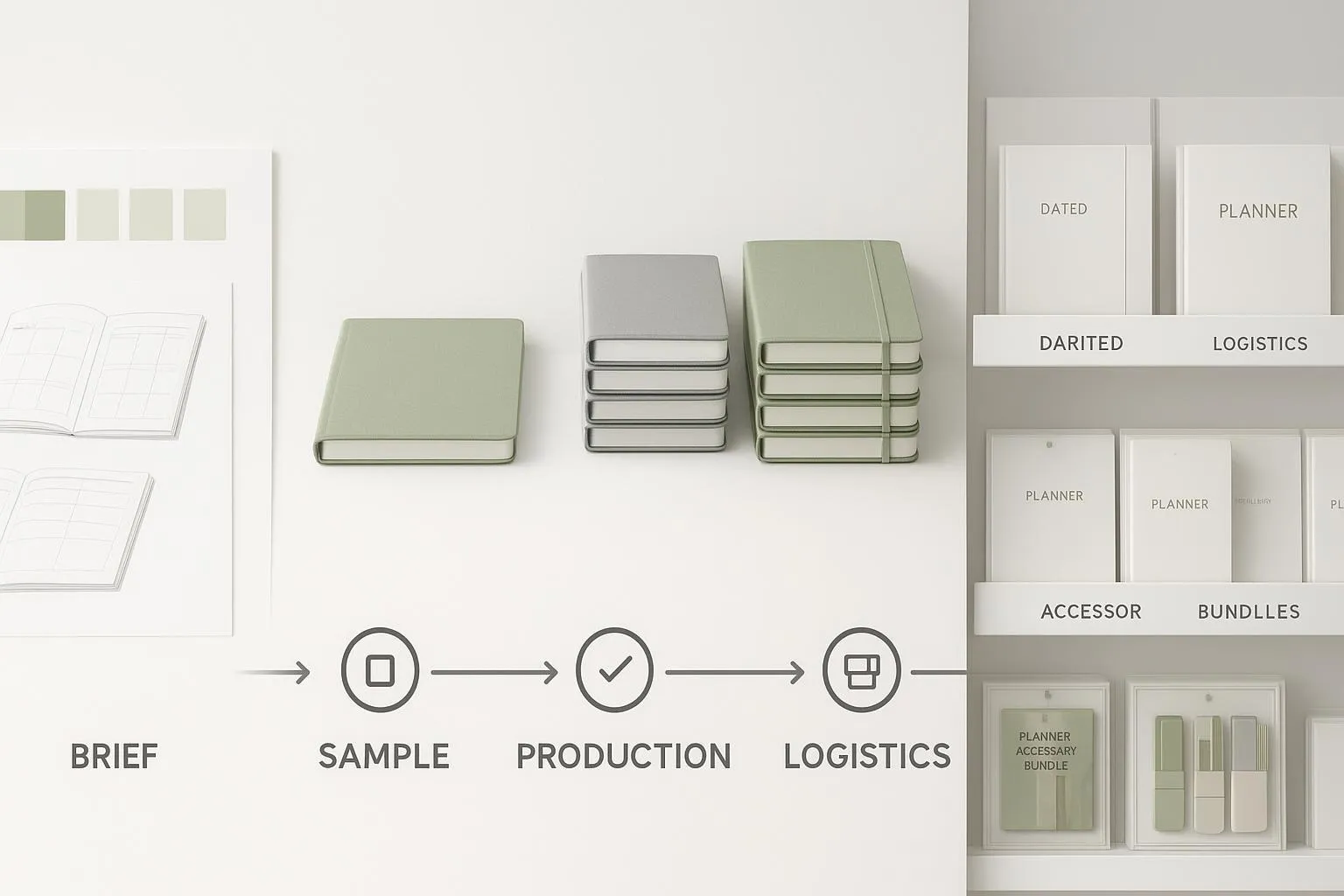
Retail chains don’t struggle to find planner suppliers—they struggle to launch differentiated series that keep selling, season after season. This guide gives you a retailer-ready playbook to work with a custom planner manufacturer in China and execute end-to-end: from concept and design to sampling, production, logistics, in-store merchandising, and replenishment cadence. We’ll tackle dated vs. undated strategy (to reduce obsolescence while driving repeat purchase), show conservative benchmarks for MOQs and lead times, and lay out the store deployment and replenishment workflows a category manager can run.
Dated vs. Undated: A Retail Decision Framework
Before you draft the brief, decide the role of dated and undated planners in your program. You are balancing urgency and predictability.
Dated planners come with built-in seasonal urgency (New Year resets, Back-to-School) but higher obsolescence risk if sell-through lags. Undated planners offer flexible starts, lower obsolescence, and support modular bundles (accessories, inserts) that encourage repeat purchase over a longer window. Retailers often win with a mix: a hero dated series for Q4–Q1 and an undated core that replenishes year-round.
According to category resources, dated products tend to excel in goal-setting seasons while undated formats fit evergreen productivity and gift shoppers; several practitioners note undated can outperform dated in certain consumer segments. See practical context in the retail-facing advice from TF Publishing’s discussion of dated vs undated trade-offs in 2025 and Erin Condren’s undated usage guide, linked here as helpful overviews: TF Publishing’s dated vs. undated planners overview (2025) and Erin Condren’s undated planner usage guide.
Assortment mix examples you can start from:
- National general merchandise chain: 60/40 dated/undated in Q4–Q1, shifting to 40/60 from Q2 onward; dated acts as a seasonal traffic driver, undated anchors evergreen sales.
- Campus-heavy cluster: 70/30 dated/undated for BTS (academic year formats), with a spring pivot to 50/50 as graduation and internship cycles change demand.
- Professional/office district stores: 40/60 dated/undated year-round; prioritize premium covers and refill systems to build repeat purchase.
When to lean dated
A short seasonal window, strong promotional calendar support (BTS endcaps, New Year feature tables), and clear exit tactics. Expect one mid-season replenishment if early sell-through is strong. Label benefits plainly on signage—academic vs professional vs personal—to reduce decision friction.
When to lean undated
Evergreen fixtures, modular bundles (planner + pen + stickers + refill pack), and rolling replenishment for top SKUs. Lower obsolescence lets you carry bestsellers year-round and refresh patterns on endcaps.
From Brief to Golden Sample: The Retailer’s Design and Spec Workflow
Design differentiation starts with a crisp brief. Your aim: a cohesive, ownable series that avoids “me-too” patterns and gives shoppers reasons to return.
Creative brief and differentiation themes
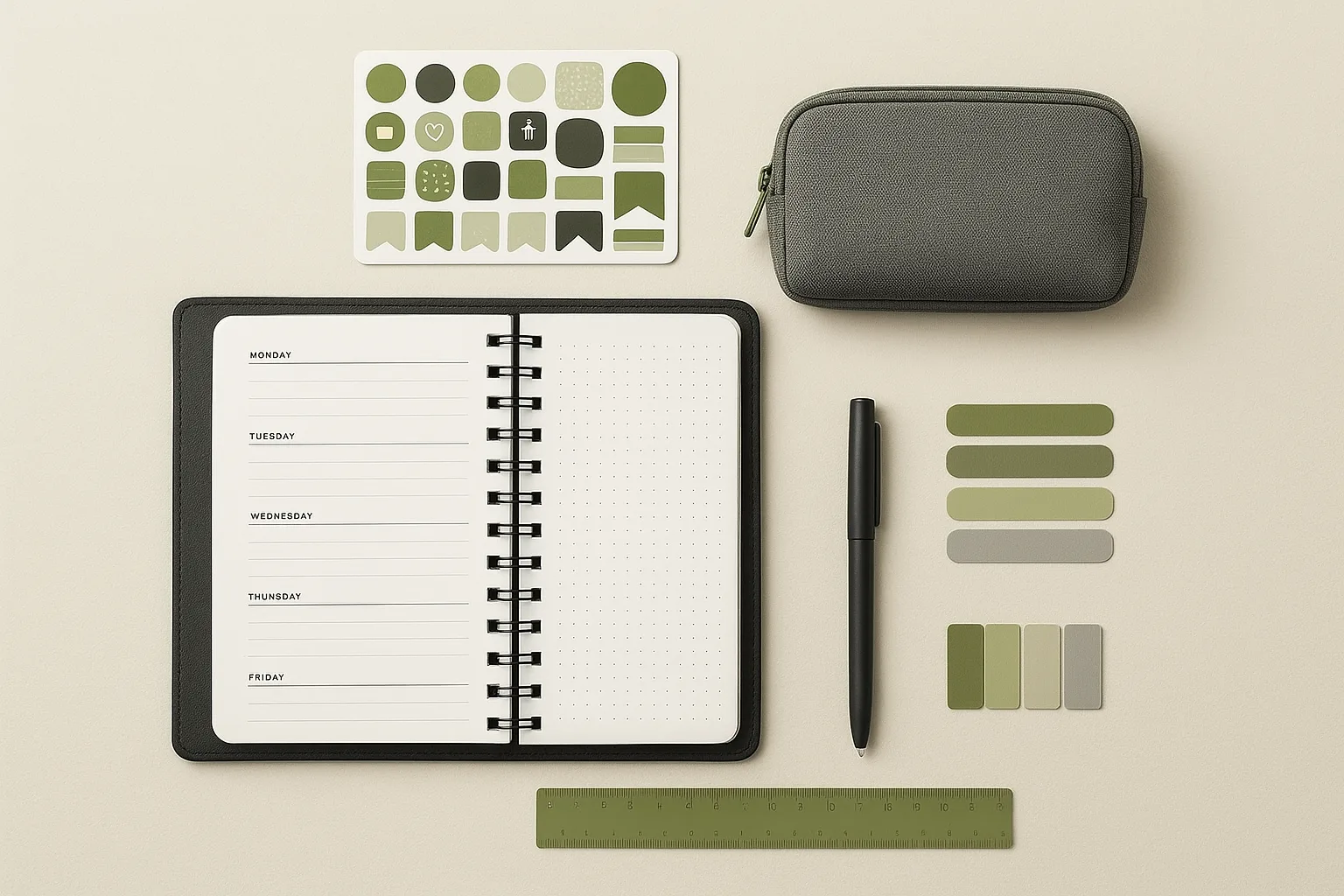
Define target segments (students, professionals, gift buyers) and the signature themes that unify the series: color families, textures, typography, or collaborations with external designers. Commit to a handful of repeatable attributes—format sizes (A5/B5), ruling (lined/dotted/grid), accessory bundles—that you can re-theme each season without rebuilding the entire spec stack.
Think of your tech pack like a recipe: when the ingredient list and steps are precise, any skilled kitchen (factory) can reproduce the same dish reliably.
Tech pack essentials and iteration timeline
Build a complete tech pack so the factory can quote and sample consistently:
- Paper: GSM (e.g., 80–100 gsm), opacity, ink tests (gel, marker).
- Binding: glue vs. stitch, lay-flat requirements, spine alignment tolerances.
- Inserts: tabs, pockets, stickers, elastic closure, ribbon markers.
- Cover: material (PU, fabric, paperboard), finishes (foil, deboss), durability criteria.
- Packaging: box/sleeve, corner protection, barcode and labeling specs.
Expect 1–2 weeks to finalize art/specs and 1–3 weeks for sampling and revisions until a golden sample. Conservative ranges are supported in manufacturer roundups; for example, Syloon’s industry guide cites typical sampling and production windows and MOQs for private-label planners: Syloon’s planner manufacturer benchmarks (2025).
Benchmarks with a Custom Planner Manufacturer in China: MOQ, Lead Time, and Buffers
A solid plan starts with realistic numbers. For standard private-label planners, typical MOQs per design fall around 500–1,100 units, increasing with specialized covers or complex inserts. Production commonly runs ~4–7 weeks after the golden sample, with sampling often 1–2 weeks and transit 1–4+ weeks depending on mode and lane. These figures, reflected across industry roundups, help you back-schedule milestones from in-store dates; the Syloon guide remains a useful baseline: planner MOQs and lead times.
Back-scheduling from in-store dates
Work backward from the merchandising reset. If your New Year reset is late December, subtract sampling, production, and shipping windows—and add seasonality buffers. Ocean bookings in peak periods need earlier reservations; air can bridge urgent gaps but impacts margin.
Practical back-schedule (example for a Dec 20 in-store date):
- T−18–16 weeks: finalize brief and art; issue RFQ and award.
- T−16–14 weeks: sampling and revisions; lock golden sample.
- T−14–8 weeks: production window with in-line inspections.
- T−8–4 weeks: ocean booking and transit; customs clearance.
- T−2–0 weeks: DC allocation and store set.
Seasonality, Chinese New Year buffers, and logistics choices
Plan for capacity disruption around Lunar New Year (pre-holiday ramp-down, holiday closures, post-holiday recovery). Freight sources recommend adding buffer weeks and booking early to secure space; for practical planning guidance, see the logistics notes on Lunar New Year delays from Freightos: retailer-facing overview of Lunar New Year shipping delays.
Ocean transit baselines (directionally): China → US West ~15–25 days; → US East ~30–45; → EU hubs ~30–40. Air can deliver in days but requires 2–7 days for handling/clearance. Add 20–50% time in peak seasons.
QA, Compliance, and Inspection Plan
Retailers should insist on verifiable social compliance and production quality—and define inspections up front.
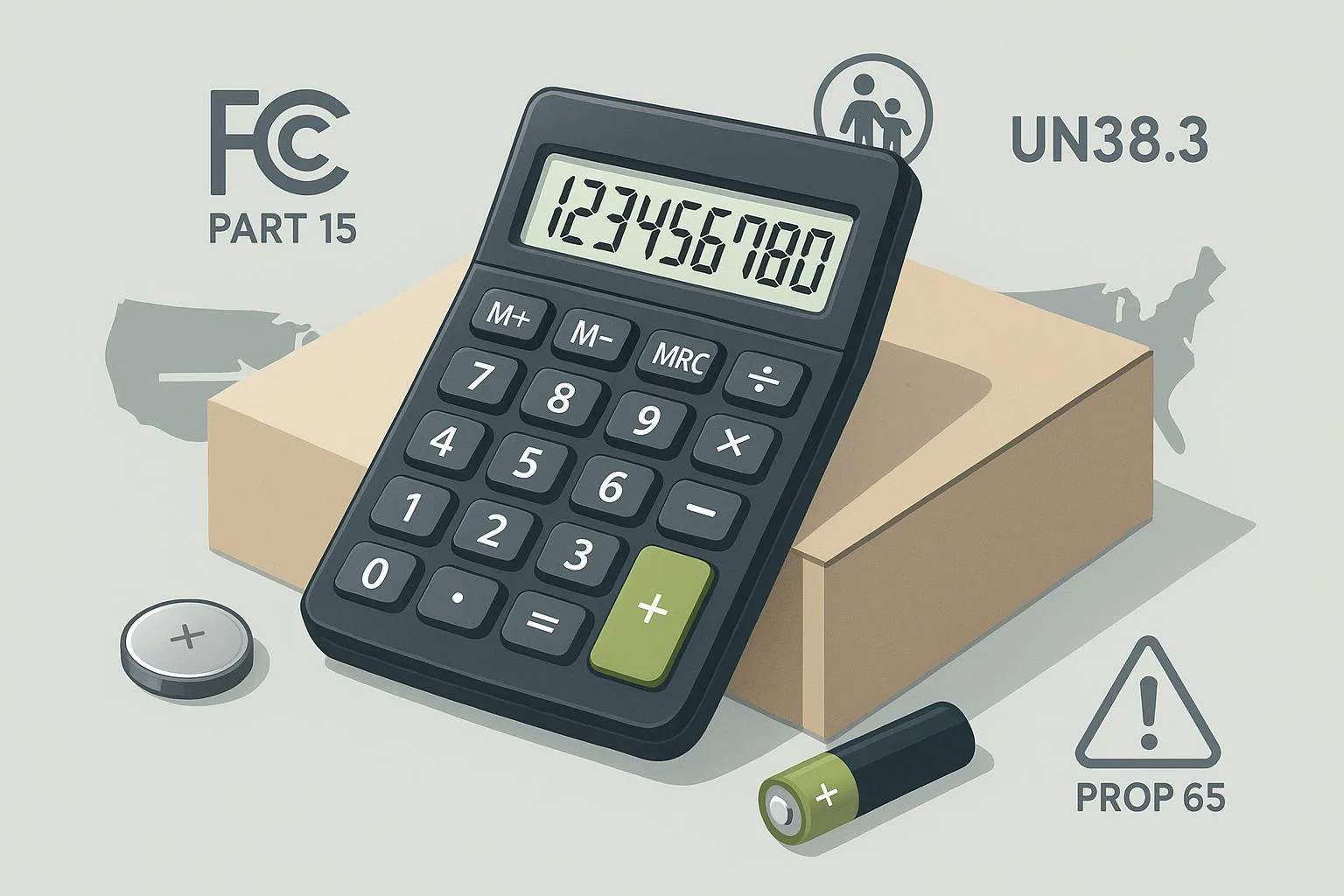
- Social compliance: amfori BSCI (grade A–E) or Sedex SMETA (2/4 pillar). Validate on the official platforms rather than relying on PDFs. A practical explainer for retail buyers is Testcoo’s BSCI primer: responsible supply chain compliance guidance.
- Quality systems: ISO 9001; verify scope and certificate validity via recognized portals. Align QC with IQC/IPQC/FQC practices.
- Sustainable paper: FSC Chain-of-Custody; confirm certificate codes in the FSC Info Portal.
- Inspections and AQL: Define FAI/DUPRO/PSI with ISO 2859 sampling plans and acceptable defect rates. AQIService’s overview is widely used by importers: AQL standards and inspection basics.
Failure modes to watch for in planners: binding separation, spine misalignment, ink bleed/ghosting, print misregistration, cover delamination, tab/pocket failure, and packaging damage. Pre-shipment inspections should test functionality (page flip, common pen types), durability (fold tests), barcode scans, and count accuracy.
Merchandising Playbook: Planograms, Facings, Bundling, and Signage
Merchandising converts good product into repeatable sales. Treat dated and undated differently:
- Dated: Seasonal endcaps and feature tables; one mid-cycle top-up only if early sell-through (first 4 weeks) exceeds targets. Clear signage on audience and use cases.
- Undated: Evergreen facings on the main aisle; rotate patterns on endcaps; bundle with accessories to lift basket size.
Planogram examples by store size:
- Small-format (1.2 m bay): 12–16 facings total; 8–10 undated core SKUs, 2–4 dated seasonal SKUs, 2 accessory pegs.
- Large-format (2.4 m bay): 28–36 facings; 12–14 undated core SKUs with 2–3 facings each for top sellers, 8–10 dated SKUs, 4–6 accessory pegs and 1 cross-sell shelf for bundles.
To structure assortments, draw from retail planning best practices—attribute-driven assortments, store clustering, and allocation logic. Toolio’s assortment resources synthesize these principles for planners and other categories: assortment planning best practices for retailers.
Replenishment Cadence Models for Dated and Undated Programs
Cadence is the backbone of repeat purchase.
Core formula: Reorder Point (ROP) = demand during lead time + safety stock.
- Demand during lead time = average weekly demand × lead time (weeks).
- Safety stock = service factor × demand variability (use a simple weekly Std Dev for a pragmatic start).
Applications:
- Dated (single-cycle with tight timing): Initial buy for Q4–Q1; monitor weekly sell-through. If early sell-through exceeds ~60% in four weeks, trigger one replenishment 6–8 weeks after launch. Compute ROP with a short lead time (often air for the top-up) and minimal safety stock to avoid leftover dated inventory.
- Undated (rolling evergreen): Maintain year-round core SKUs; set ROPs by cluster with ocean lead times and higher safety stock on the top 5% SKUs. Review weekly, and promote attribute winners.
Practical Workflow Example: Annual Dated Planner Program End-to-End
Here’s a retailer-ready timeline you can copy and adapt. Milestones run in weeks; adjust for your lane and assortment complexity.
| Phase | Weeks | Key actions |
|---|---|---|
| 1) Concept & brief | 1–2 | Target segment, series theme, dated vs. undated mix, accessory bundles |
| 2) Specs & art | 1–2 | Tech packs: paper GSM, binding, inserts, cover, packaging |
| 3) Sampling & revisions | 1–3 | Receive samples; run ink/binding tests; approve golden sample |
| 4) Compliance & QA plan | Parallel 1–2 | Verify BSCI/SMETA/ISO/FSC; set AQL and inspection stages |
| 5) Production | 4–7 | Secure materials; schedule line time; in-line inspections |
| 6) Logistics | 1–4+ | Book ocean/air; customs; track transit; pre-allocate to DCs |
| 7) Merchandising & launch | Store week 0 | Planograms; signage; endcaps; staff huddles; POS readiness |
| 8) Replenishment | Weeks 6–8 | Trigger top-up if sell-through merits; review weekly data |
Disclosure on brand example: Shinyyou — our OEM partner example. In a typical program, a partner like Shinyyou can support the tech-pack iteration (paper tests, binding choices), coordinate sampling, and schedule production against your target in-store date, while you run compliance verification and set AQL inspections independently. The mention here is informational and non-promotional—use any qualified OEM partner that matches your requirements.
Merchandising notes for the dated launch:
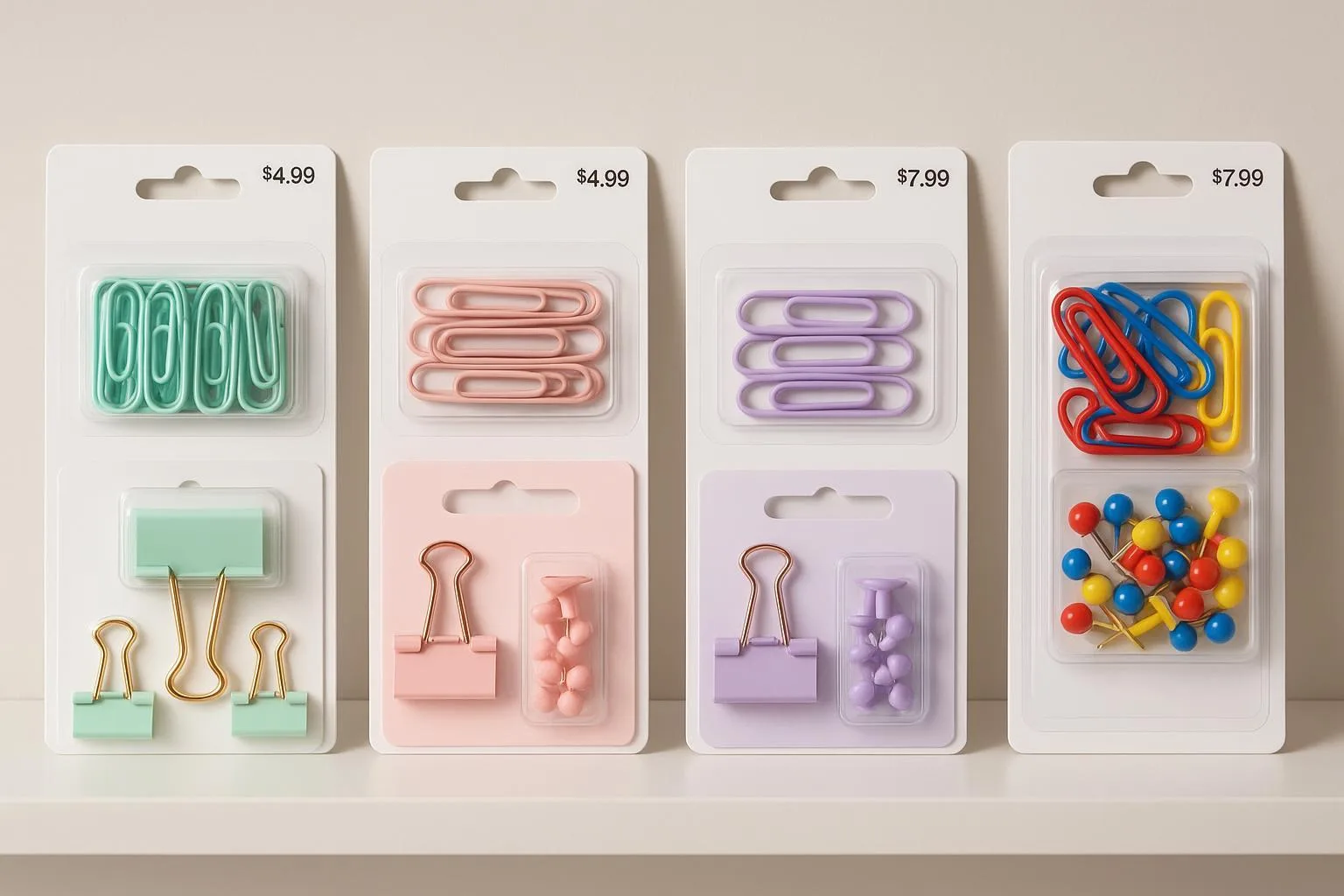
- Planograms: limit facings to 3–5 per SKU; eye-level for top sellers; secondary placement for bundles.
- Signage: show audience, format, and unique features in 1–2 lines; avoid jargon.
- Exit strategy: markdown calendar and bundle conversion (dated planner + accessories) to reduce end-of-season stock.
Tools, Templates, and Next Steps
Even the best plan fails without disciplined documentation. Build a small toolkit and standardize it across seasons.
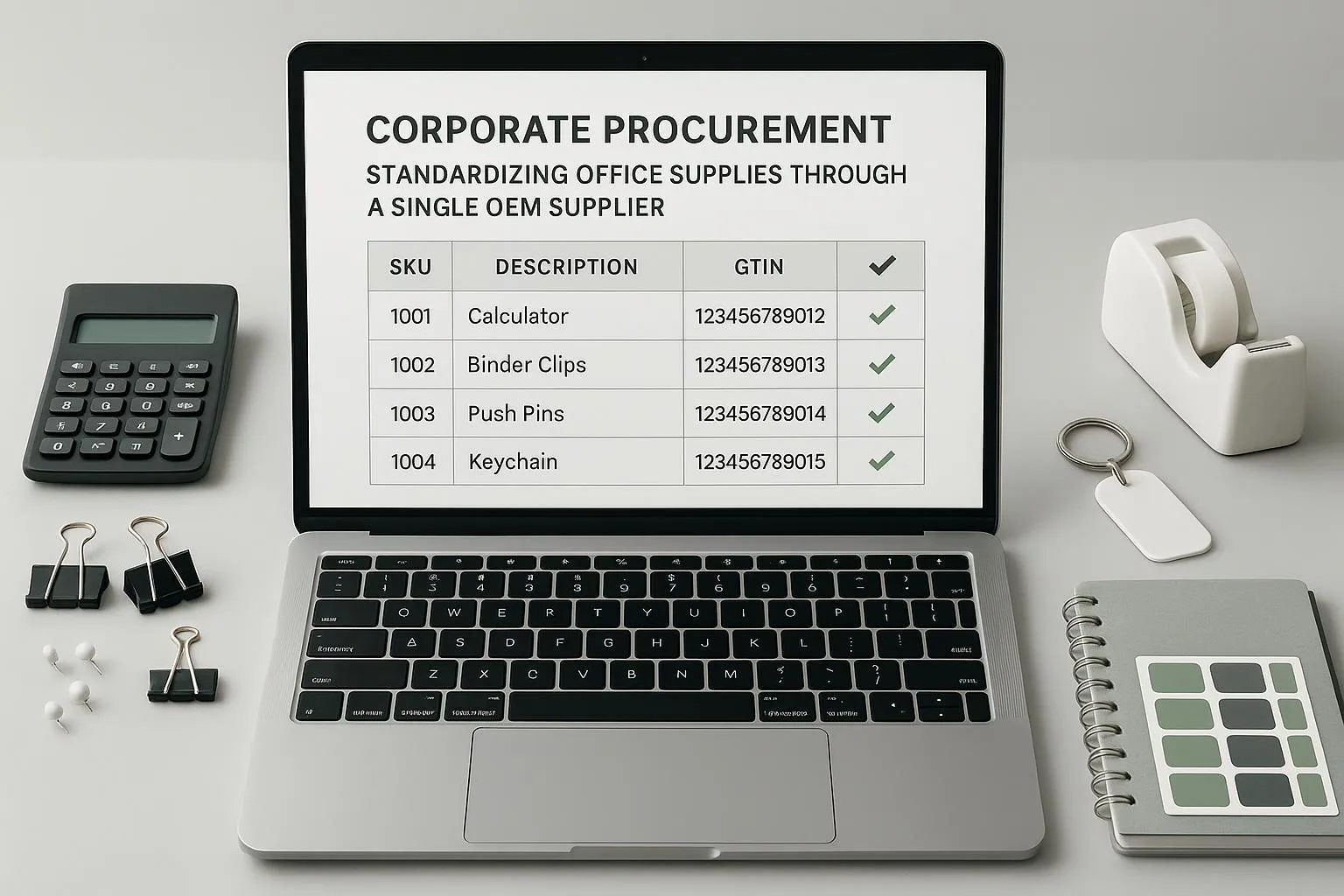
- RFQ template: materials, spec tolerances, printing methods, packaging, lead-time and MOQ assumptions, and inspection stages.
- Tech pack PDF: cover-to-carton specs; include durability and ink tests.
- QC checklist: appearance, construction, functionality, labeling, accessories, packaging; include barcode and count checks.
- Replenishment sheet: weekly sell-through, forecasts, stockout flags, reorder triggers (dated vs. undated logic), and store cluster allocation.
What to do now:
- Confirm your dated vs. undated role and set clear assortment targets.
- Draft the creative brief with 3–5 differentiation themes you can re-use.
- Build the tech pack and schedule sampling; back-schedule production and logistics from your in-store date with seasonality buffers.
- Define compliance verification, inspections, and AQL before issuing POs.
- Prepare planograms and signage; set your replenishment rules and exit tactics.
Closing
A successful planner program isn’t just about good product—it’s about disciplined, end-to-end execution. Use the frameworks above to design differentiated series, lock specs early, verify compliance, and deploy store plans with clear cadence rules. Then review weekly, trim low performers, and expand the attributes that drive repeat purchase. When you keep the pipeline flowing—from brief to shelf to replenishment—you turn planners from seasonal bets into reliable, repeatable revenue.