In the PAPER & Notebooks industry, binding, paper, and packaging are very important. These elements greatly affect what you buy. For example, people usually prefer bound notebooks because they last longer. Recently, more consumers are seeking eco-friendly paper options. This trend shows a move towards sustainability. Additionally, packaging influences how people perceive product quality and its environmental impact. As a retail buyer, understanding these factors can help you make informed choices that align with consumer preferences.
Key Takeaways
Pick strong binding types like Smyth-sewn for notebooks that last longer. This helps with quality and use.
Choose good paper weights between 70 gsm and 100 gsm. Thicker paper stops ink from bleeding and makes writing clearer.
Think about customization choices from suppliers. This helps you match products with your brand and what customers like.
Look at packaging closely. Good packaging protects products and affects how customers see them and their buying choices.
Check samples carefully before you order. Look at binding, paper quality, and design to make sure they meet your needs.
Binding Quality
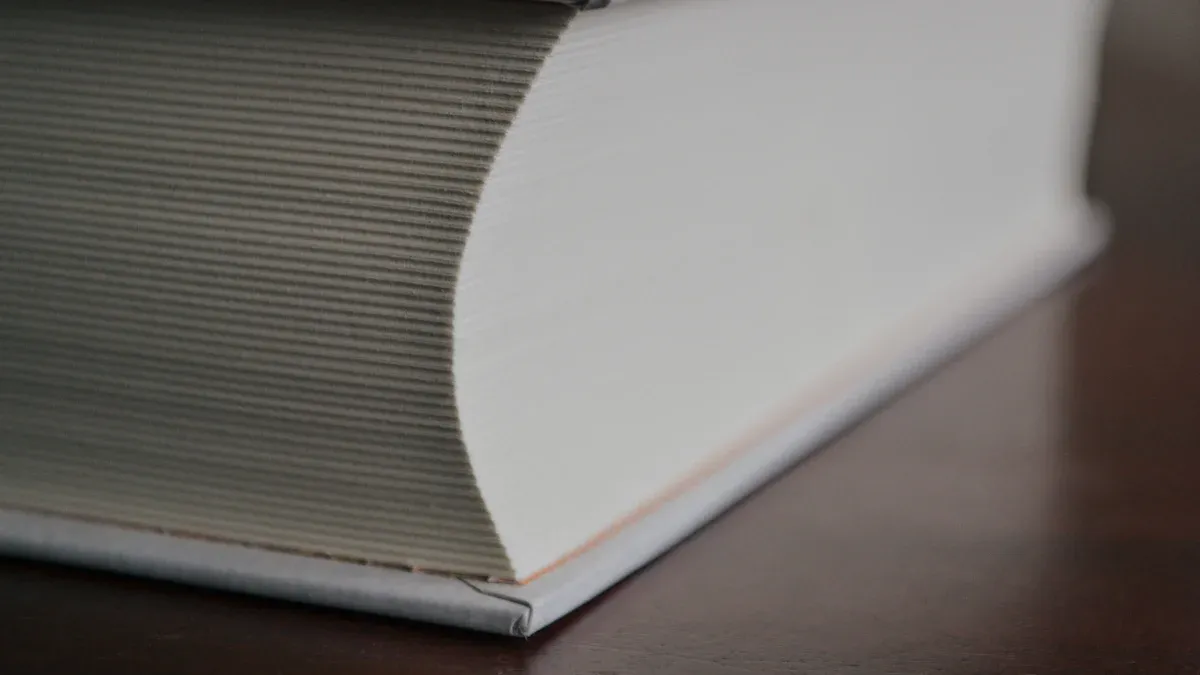
Types of Binding
When you pick a hardcover notebook, the binding type is very important. It affects how long the notebook lasts and its quality. Here are the most common binding types you will see:
Hardcover Binding: This method uses glue or stitches to attach pages to a strong cover. It is very durable and protects the notebook well, making it great for daily use.
Case Binding: In this method, pages are sewn or glued into a case that has a strong cover. This binding works well for heavy use and makes the notebook feel luxurious.
Choosing the right binding can change how long your notebook stays usable. For example, case-bound hardcover notebooks can last for many years if you take care of them.
Quality Indicators
As a retail buyer, checking the binding quality of hardcover notebooks is very important. Here are some quality signs to look for:
Spine Inspection: Look at the spine for smoothness and strength. It should not crack or feel loose when you open it.
Cover Attachment: Check how the cover is attached. Make sure there are no gaps or too much glue.
Page Functionality: Flip through the pages to see if they lie flat and turn easily without getting stuck.
Corner and Edge Examination: Check the corners and edges for clean cuts and overall strength.
To make sure you choose good-quality notebooks, follow these steps:
Open the book wide and listen for crackling sounds, which may mean the glue is old.
Gently pull on a middle page to see if it feels loose, which could mean poor glue use.
Make sure all parts of the binding meet high-quality standards to avoid problems.
There are also industry standards to help you check binding quality. Here’s a quick look at some important standards:
Standard Name | Description |
|---|---|
NASTA | Standard for school textbooks. |
ANSI/NISO Z39.66-1992 | Sets strict rules for hardcover bindings. |
ANSI/NISO/LBI Z39.78-2000 | Updated standard for library binding, ensuring high quality and strength. |
By knowing these binding types and quality signs, you can make smart choices when picking hardcover notebooks for your store.
PAPER & Notebooks Evaluation
Paper Types
The kind of paper you pick for your notebooks really affects how you write. Good paper makes your ink look clear and bright. Here are some common types of paper you might see:
Smooth Paper: This paper shows off the shine and brightness of ink. It gives a smooth writing feel, which is great for fountain pens.
Textured Paper: This paper has a bumpy surface that soaks up ink fast. It feels different, but it might make colors less bright.
Heavyweight Paper: Papers that weigh between 80-100 lb stop ink from bleeding through and feathering. This keeps your notes clear and easy to read.
When you try different mixes of ink, paper, and nibs, you can improve how you write. For example, smoother papers let your pen slide easily, while absorbent papers can cause problems like feathering and bleed-through.
Selection Factors
When you choose paper for hardcover notebooks, think about several important factors. These can really affect your choice and the quality of the notebooks you sell. Here’s what to consider:
Factor | Description |
|---|---|
Paper Quality | Check the texture and weight of the paper. This changes how you write and what users like. |
Size | The size of the notebook is important for how easy it is to use and carry. |
Cover Design | Choosing between hardcover and softcover affects how long it lasts and what users prefer. |
Binding Quality | How the notebook is bound affects how well it works and how long it lasts. |
Page Layout | You can choose blank, ruled, or gridded pages to fit different writing styles and needs. |
Shinyyou‘s PAPER & Notebooks series does a great job meeting these standards. The brand uses good paper that stops bleed-through and makes lines sharper. Each notebook has designs you can customize, so you can meet specific likes. The strong build makes sure your notebooks last through daily use, making them perfect for work and school.
By focusing on these paper types and selection factors, you can make smart choices that fit your customers’ needs and wants.
Packaging Considerations
Packaging Types
Packaging is very important in retail. It protects your products and attracts customers. Here are some common types of packaging for hardcover notebooks:
Simple OPP Bag: This clear bag gives basic protection and lets you see the product.
Printed Belly Band: This band wraps around the notebook. It provides space for branding and keeps it secure.
Gift Box: This is a fancy option, great for special occasions or high-end products.
Custom Sleeve: This sleeve can be made to fit your brand’s design and message.
Each type of packaging has a different purpose. It can make your notebooks look more appealing.
Brand Perception
The packaging you pick affects how customers see your brand. Here are some important points to think about:
First Impressions Matter: Packaging is often the first thing customers see. It can help boost sales and influence buying choices.
Silent Salesperson: Good packaging acts like a silent salesperson. It shows quality and value without needing words.
Consumer Preferences: Many shoppers say packaging affects their buying choices, especially for new brands. High-quality packaging can make customers willing to pay more for nicely packaged notebooks.
Dust Jacket | Slipcase | |
|---|---|---|
Marketing space | Front, spine, back & two flaps | Front, back, spine edge, top & bottom |
Cost per book | Low | High |
Replaceable | Yes | Difficult (requires custom remake) |
Shelf appeal | Bookstore-friendly | Collector-grade |
Protection | Good | Excellent |
Luxury factor | Moderate | High |
Best for | Mass-market novels, photography books, memoirs | Limited editions, gift sets, art monographs |
Good packaging can build trust and preference. These are important for retail buyers. By choosing the right packaging, you can make your products stand out in a busy market and show your brand identity clearly.
Comparative Material Analysis
Material Comparisons
When you look at hardcover notebooks, think about the differences in binding, paper, and packaging materials. Each part is very important for how long the notebook lasts and its cost. Here’s a quick comparison:
Binding: Hardcover binding gives great protection and lasts a long time. It handles daily use better than softcover notebooks. However, it usually costs 1.5 to 2 times more than softcover options.
Paper: The type of paper you choose affects how you write and the environment. Good quality paper stops ink from bleeding through and makes writing clearer. But, making paper adds a lot to carbon emissions. In 2019, 41% of Penguin’s CO2 emissions came from paper.
Packaging: Good packaging makes a strong first impression. It grabs attention and shows value. Smart design builds trust and helps buyers feel confident.
Value Assessment
You need to think about the cost and quality of materials when buying. Here are some important points to keep in mind:
Compliance Aspect | Description |
|---|---|
Map Before You Source | Find out the rules in each area to avoid surprises. |
Documentation Defeats Disputes | Keep up-to-date certificates and test reports for quick checks. |
One Spec Rarely Fits All | Rules can change by location, so be careful with details. |
Verify Claims at Quote Stage | Make sure suppliers give needed certifications before you order. |
Systems Beat Fire-Fighting | Use a checklist to regularly check for compliance. |
By knowing these comparisons and assessments, you can make smart choices that fit your customers’ needs. Remember, even small changes in material choices can greatly affect the environment, especially when making millions of notebooks.
Practical Tips for Buyers
Sample Evaluation
When you check samples of hardcover notebooks, follow these easy steps:
Define Your Use Case: Decide if the notebooks are for students, workers, or giveaways. This helps you choose the right style and strength.
Determine Minimum Order Quantity (MOQ): Know what the vendor needs to match MOQ with what you actually need.
Compare Paper and Binding Specs: Look for notebooks with 70+ gsm paper and strong binding for long-lasting use.
Request Samples: Always test how well the paper works for writing. Check for problems like ghosting or feathering.
Evaluate Supplier Reliability: Read reviews, check return policies, and look at delivery times to make sure the supplier is trustworthy.
Avoid Red Flags: Be careful of very low prices, unclear descriptions, and no sample options.
By following these steps, you can make sure the notebooks you pick meet your quality needs and what your customers expect.
Decision-Making Strategies
Making smart buying choices involves some key strategies:
Define Your Use Case: Figure out why you need the notebooks to help with size and quality choices.
Determine Quantity Needs: Estimate how many you need and check the supplier’s minimum order amounts (MOQs).
Select Format and Size: Pick common sizes based on how easy they are to carry and how much writing space you need.
Evaluate Paper and Binding: Test samples to check their quality and strength.
Check Customization Options: Ask about where to place logos and matching colors to improve branding.
Review Supplier Reliability: Make sure the business is registered and read customer reviews to ensure you work with a good supplier.
Negotiate Pricing and Terms: Talk about prices and payment terms to get the best deal.
Order a Sample Batch: Always check product quality before making a bigger order.
By using these strategies, you can balance cost, quality, and brand needs well. Remember, hardcover notebooks are strong and look nice, which can justify higher prices. This way, you can meet your target audience’s needs.
In conclusion, checking binding, paper, and packaging is very important for retail buyers of hardcover notebooks. Here are the main points to remember:
Binding Durability: Pick sewn bindings instead of glued ones for longer-lasting notebooks. Smyth-sewn notebooks are very strong.
Paper Quality: Choose paper weights from 70 gsm to over 100 gsm. Thicker paper stops ink from bleeding through and makes writing better. Look for acid-free and FSC-certified papers to help the environment.
Customization Options: Think about the minimum order amounts and printing methods offered by suppliers.
By paying attention to these factors, you can make smart choices that fit your customers’ needs and wants. 📝
FAQ
What is the minimum order quantity for Shinyyou notebooks?
You need to order at least 500 pieces for standard products. For custom products, the minimum order is usually 1,000 pieces.
How long does it take to receive my order?
It takes about 30 to 45 days to get your order after you confirm it and approve samples. If you need it faster, urgent orders can be ready in 20 to 25 days.
Can I customize the notebooks with my logo?
Yes, you can add your logo to the notebooks. Shinyyou has many options for customization, like matching colors and changing designs.
What types of paper do you use in your notebooks?
Shinyyou uses good quality paper types, such as smooth, textured, and heavyweight options. These choices help improve writing quality and stop ink from bleeding through.
Are your products environmentally friendly?
Yes, Shinyyou cares about the environment. Many products meet international standards, including FSC certification, which means they use eco-friendly materials.