Office stationery is having a quiet reset in 2026.
On the surface, the “what” looks simple: clean notebooks, calmer palettes, fewer desk items. The “why” is more operational—hybrid work, tighter ESG scrutiny, and procurement teams being asked to prove value (and risk control) for indirect spend.
This guide is built for procurement managers who need two things at once:
A clear view of what’s changing in office stationery design so you don’t buy last year’s look.
A purchase framework that prevents the classics: sample-to-bulk drift, vague sustainability claims, and supplier promises that collapse under a real delivery schedule.
2026 corporate office stationery design trends shaping modern workplaces
The safest way to use “trends” in procurement is to translate them into spec choices and evaluation criteria—not mood boards. Here are the 2026 themes that matter most for corporate environments.
Minimalism and modern design: efficiency without making the office feel sterile
In office stationery, minimalism is less about “plain” and more about intentional constraints:
Neutral palettes that reduce visual noise across shared desks.
Better typography and spacing (readability) over decorative patterns.
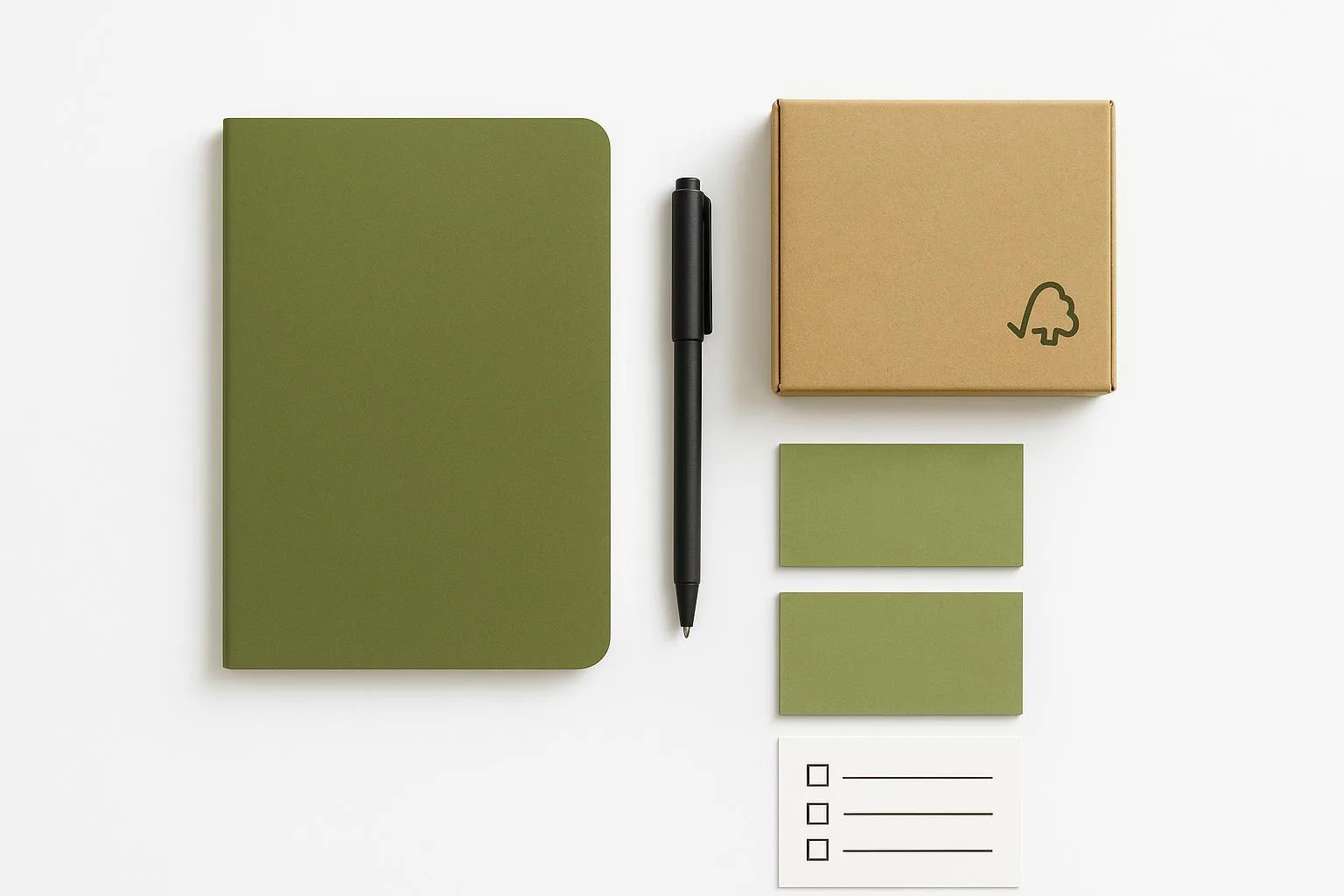
Premium-feeling materials (soft-touch, textured stock) that signal quality without loud design.
Where procurement wins: minimalist design is easier to standardize across locations. Fewer colorways, fewer SKUs, and fewer “almost-matching” batches.
What to specify (so the trend survives production):
Color tolerance: define acceptable delta (especially for brand colors).
Finish consistency: matte vs semi-matte vs soft-touch; no ambiguity.
Logo method: deboss/foil/screen print, with a “golden sample” for approval.
Key Takeaway: Minimalism is procurement-friendly only when you lock down finish + color + logo method in writing. Otherwise, “simple” designs show defects more clearly.
Sustainability and circularity: green is no longer a nice-to-have
Sustainability moved from marketing language to buyer requirements because audits and stakeholder expectations have matured. Trend coverage also reflects that sustainability now spans materials, packaging, and end-of-life choices.
For example, HKTDC’s 2026 trend overview highlights growing demand for stationery made from recycled/biodegradable materials, plus reusable/refillable designs and packaging innovations in response to evolving expectations (see HKTDC Sourcing’s 2026 stationery trends overview).
Where procurement gets burned is not “choosing sustainable.” It’s approving vague claims.
Procurement-grade sustainability inputs:
Paper sourcing and traceability (e.g., FSC chain-of-custody where relevant).
Recycled content definitions (percentage, post-consumer vs pre-consumer, method).
Packaging design choices: mono-material where possible, right-sizing, and avoiding mixed-material assemblies that can’t be recycled.
Custom stationery that’s both brand-consistent and functional
Customization is evolving beyond slapping a logo on a notebook. Corporate teams want:
On-brand design systems (colors, patterns, cover materials) that match brand guidelines.
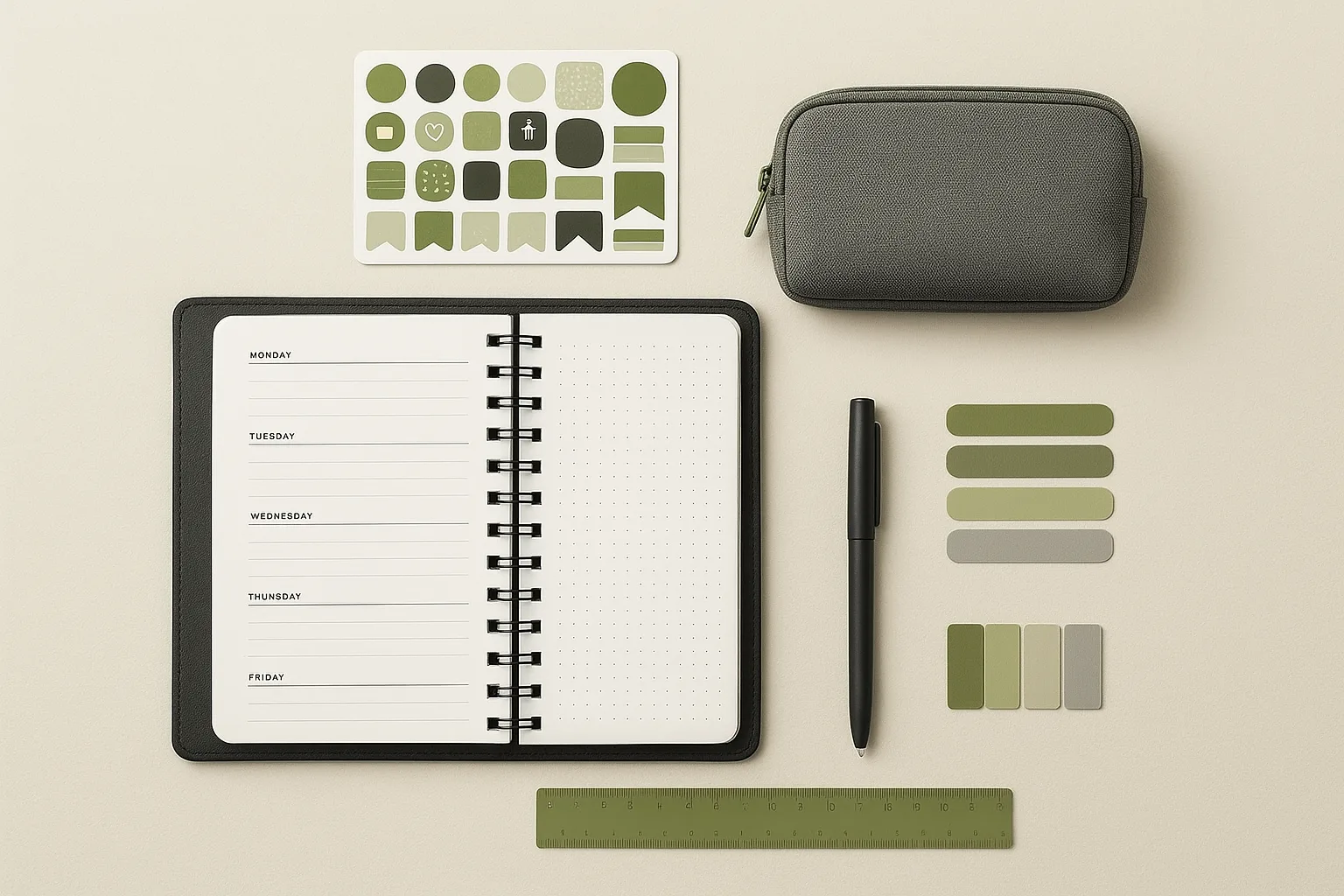
Functional personalization: department labels, role-based inserts, onboarding kits, meeting templates.
Controlled variants: enough personalization for relevance, not so much that it breaks catalog governance.
In other words: personalization should be catalog-friendly.
A practical way to think about it:
Tier 1 (standardized): same notebook, same pen; one logo placement.
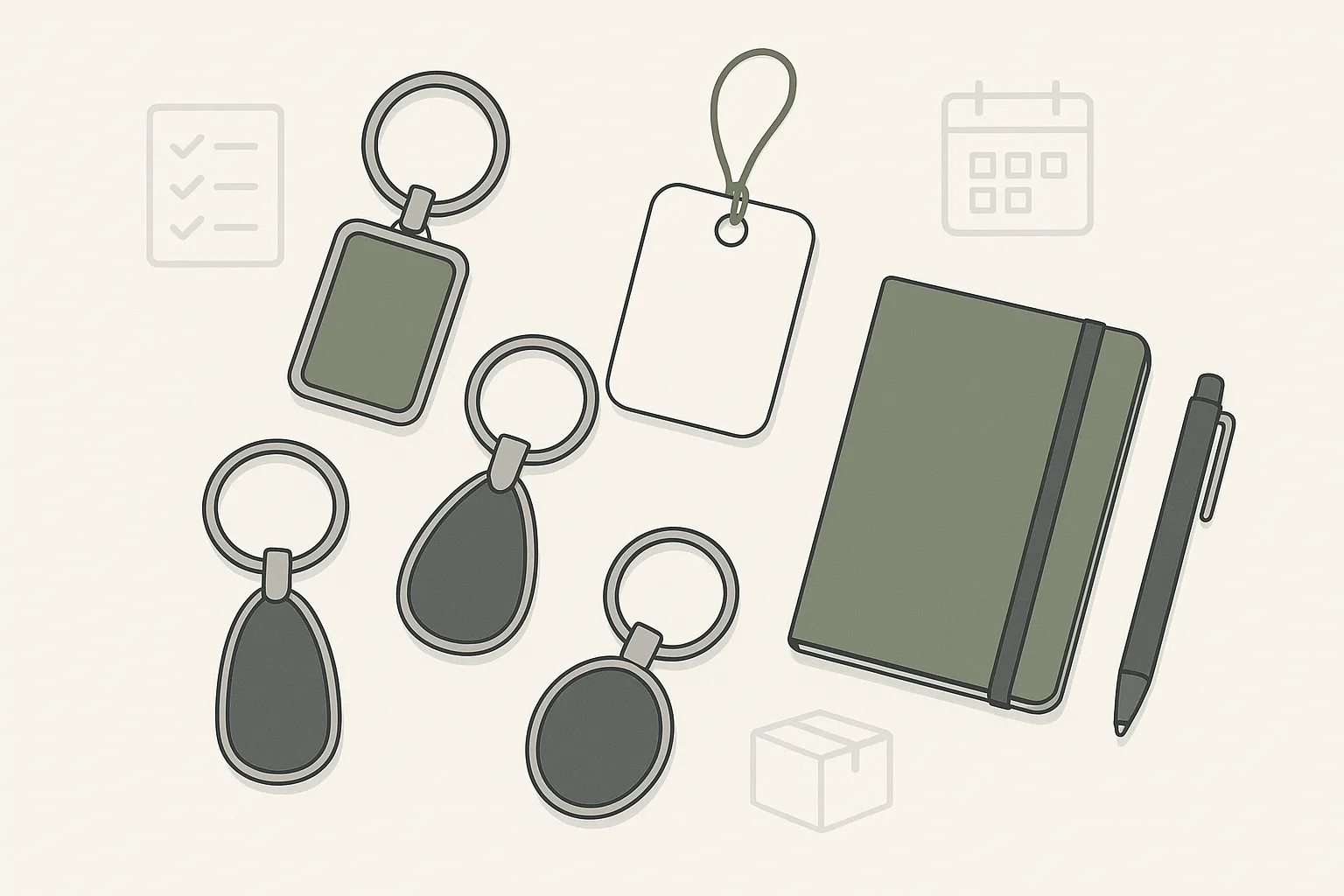
Tier 2 (role-based): 3–5 approved variants (Sales / Ops / HR / Exec) with different inserts.
Tier 3 (event-based): short-run kits for conferences or customer workshops.
If you’re sourcing OEM, require a versioning system: SKU codes, artwork file naming, and a repeat-order process that reuses approved specs.
Key considerations for corporate stationery procurement
Trends are the surface. Procurement results come from constraints, verification, and repeatability.
Balancing cost, quality, and design (without paying for surprises)
Corporate stationery cost is rarely just unit price. It’s total cost of ownership (TCO):
Rework and replacement (defects, broken items, ink failures).
Internal friction (complaints, manual reordering, approvals).
Rush shipping (when lead time slips).
Brand risk (low-quality gifts or inconsistent stationery).
Use this simple triage before you negotiate:
Define the “must-not-fail” attributes (e.g., ink performance, paper opacity, odor, finish).
Move design decisions into the spec (not informal approvals).
Agree on acceptance criteria (what happens if defects exceed tolerance?).
Common cost traps to surface early:
Tooling/mold fees for accessories.
Additional charges for color matching or special finishes.
Packaging upgrades (gift boxes) and assembly labor.
Inspection and compliance documentation fees.
Choosing stationery that meets environmental standards (and avoids greenwashing)
Start with a verification mindset. In the US, environmental marketing claims should be specific and supported with evidence; summaries of the FTC’s guidance are often used as a practical baseline for how to avoid misleading claims (see an overview of the FTC’s Green Guides).
For forest-based inputs (paper, some packaging), focus on traceability. FSC explains how Chain of Custody certification supports traceability through the supply chain (see FSC US Chain of Custody Certification).
A procurement checklist you can actually run in an RFI/RFP:
Ask for the certificate code (not “FSC compliant”).
Verify it’s active and in scope for the product category.
Require documentation consistency across quote → PO → invoice → shipment docs.
Specify how claims should appear in artwork and packaging approvals.
⚠️ Warning: If a supplier can’t provide a certificate code or keeps switching the wording (“eco paper,” “green paper,” “FSC-friendly”), treat it as a risk—don’t fix it later after artwork is approved.
If you need a practical verification workflow, PaperIndex provides a concrete checklist for verifying FSC claims and catching document mismatches (see PaperIndex’s checklist for verifying FSC claims).
Supplier selection: evaluating reliability and delivery capability
For mid-size enterprises, supplier performance is usually judged on a few outcomes:
Supplier risk response: what to do when things go wrong
Prevention (golden samples, inspections, clear specs) is only half the job. A 2026-ready program also needs a written playbook for the three failures that hurt most: late delivery, bulk defects, and documentation gaps.
A practical escalation flow you can run:
Trigger & freeze: log the issue, freeze packaging/artwork changes, and pause distribution until you’ve confirmed scope.
48-hour triage: require a corrective action report that answers: root cause, affected lot/SKUs, containment action, and recovery timeline.
Parallel recovery paths:
Plan A (recover): rework/reprint, additional inspection, air-freight for a limited tranche.
Plan B (replace): switch to pre-approved alternative materials/finishes (kept in your spec) to keep delivery on schedule.
Plan C (split shipment): ship what passes now, and hold the remainder for rework.
Commercial protections: tie chargebacks, replacement terms, and delivery penalties to measurable thresholds (defect rate, missed ship date, document nonconformance).
Close-out & prevention: update the spec, sampling checklist, and change-control steps so the same failure doesn’t repeat.
Issue-specific notes:
Lead-time slip / supply interruption: ask for a revised production plan (line booking, capacity, material arrival dates). If the slip threatens an internal deadline (onboarding/event), pre-approve a “minimum viable kit” version that can ship first.
Bulk quality failure: quarantine by lot. Define whether you need 100% sorting, partial rework, or full remake. If logo/finish is the issue, require side-by-side comparison to the golden sample under the same lighting.
Compliance / certificate gaps: stop any sustainability or FSC claim in artwork until the supplier provides the correct certificate code and the paperwork matches quote → PO → invoice → shipping documents.
Procurement tip: Put these steps into your RFQ as a one-page “incident handling clause.” If the supplier can’t agree before the order, it’s rarely smoother after a problem appears.
Repeatable quality from sample to bulk.
Stable lead time and predictable replenishment.
Documentation that stands up to audits.
Communication that reduces cycle time (spec alignment, artwork proofing, change control).
A scorecard you can use (weighting depends on your risk tolerance):
Quality system: QC checkpoints, test coverage, defect handling, traceability.
Sampling discipline: golden sample process, sign-off workflow, change-control.
Capacity and planning: ability to support phased rollouts and replenishment.
Compliance documentation: materials declarations, certifications, test reports.
Packaging and logistics: labeling, carton specs, damage prevention, shipment readiness.
Responsiveness: time-to-quote, clarity of spec questions, artwork turnaround.
If you’re sourcing branded items, add one more criterion: brand execution reliability (logo placement, ink color match, and finish consistency).
Shinyyou’s popular corporate stationery recommendations
The point of this section isn’t to “push products.” It’s to show how to translate trends into a controlled corporate catalog—with SKUs that are easy to spec, approve, and reorder.
Custom notebooks and office stationery: using personalization to reinforce brand consistency
For corporate environments, notebooks are still the most procurement-friendly branded asset because they’re easy to standardize and distribute.
How to spec custom notebooks for 2026:
Choose a minimalist cover + tactile finish to modernize the look.
Keep personalization controlled (department labels, onboarding inserts).
Specify paper requirements (weight, opacity, recycled content, ruling) to avoid surprises.
If you’re building a notebook line as a base SKU, start from a stable category and then add controlled variants. Example starting point: hardcover notebook options.
Desk accessories: improving workspace function without creating clutter
2026 desk accessories should be judged by two questions:
Does it reduce friction (time to find, store, or reset the workspace)?
Can it be standardized across offices without looking mismatched?
Organizers and trays are often the easiest win because they support both minimalism (less mess) and functionality (clear zones).
For a simple, standardizable desk accessory, a category reference is acrylic organizer styles—use it as a benchmark for size, material, and finish choices.
Gift-ready stationery sets: a clean way to strengthen client relationships
In 2026, gift stationery works best when it feels like a “system,” not a random bundle:
One hero item (notebook or planner).
One writing instrument (pen or highlighter).
One functional desk item (tray, organizer, or compact tool).
Packaging that is durable and easy to store.
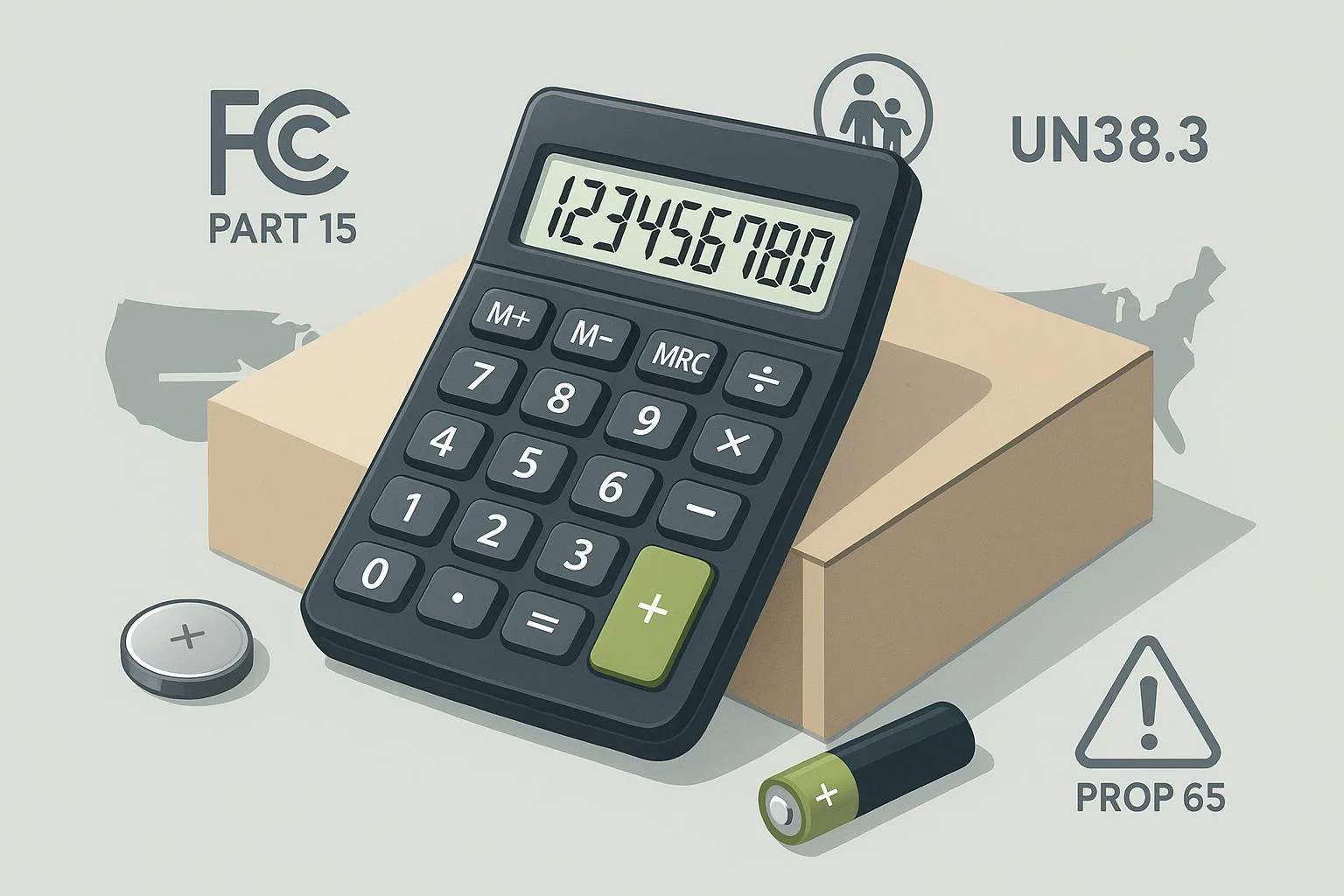
If you want a simple add-on that supports an office kit, reference categories like highlighters and writing instruments and basic office tools (e.g., office calculators) to define what belongs in your approved catalog.
Practical examples and best practices for successful stationery sourcing
The strongest “case studies” in stationery procurement are often process case studies—what you standardized, what you verified, and how you prevented defects. Below are two anonymized, realistic patterns you can adapt without relying on unverifiable performance claims.
Example 1: Using custom stationery to improve employee experience without losing catalog control
Situation: A 300–700 person company wanted a consistent onboarding experience across multiple locations. HR wanted “premium feel.” Finance wanted cost predictability. IT wanted fewer exceptions and fewer one-off purchase requests.
What happened in real life: the pilot notebooks looked perfect, but the first bulk run showed a small color drift on the cover that made the logo look off under office lighting. The supplier said it was “within tolerance,” but there was no written tolerance.
What worked:
Procurement standardized one base notebook SKU and capped variants at three role-based inserts (Sales / Ops / People).
They converted “look and feel” into a one-page spec: cover material + finish, paper weight/opacity, logo method, and a written color tolerance tied to a golden sample.
They ran a two-step approval: pre-production sample approval, then an early-run check (first-carton inspection) before the factory completed the full batch.
They set a reorder cadence based on onboarding forecasts, with a safety buffer for peak hiring months.
Procurement lesson: the fastest way to keep personalization safe is to codify it—cap variants, lock a golden sample, and define what “acceptable” means before bulk production starts.
Example 2: Using stationery kits to reinforce culture and cut maverick spend
Situation: Teams were buying ad-hoc stationery and gifts with different suppliers. Brand looked inconsistent, and procurement kept getting “urgent” requests two weeks before events.
The friction: when procurement tried to centralize everything, departments pushed back. “Our clients expect something nicer,” Sales said. Meanwhile, the supplier’s lead time tightened during peak season, and small last-minute changes (a new event date on a card) threatened to reset the clock.
What worked:
Procurement launched two kits: one for internal use, one client-facing. The client-facing kit had a clearly defined upgrade (packaging + hero item) so Sales didn’t need custom bundles.
They used a short request form that forced a decision: use case, quantity, in-hands date, and approved kit. Anything outside that flow required management approval.
They locked artwork versions and added change-control: after sign-off, changes were treated as a new SKU/version with a new lead-time promise.
They agreed on a “split shipment” option: ship the core items on time, then follow with any upgraded packaging if needed.
Procurement lesson: kits work when governance is real—but the ordering path is even easier than going off-catalog, especially under deadline pressure.
Summary and how to plan for 2026 procurement
A 2026-ready stationery program is not a trend board. It’s a controlled system:
Minimalist design that can be specified and repeated.
Sustainability claims that can be verified (and defended in audits).
Personalization that improves relevance without multiplying SKUs.
Suppliers evaluated on sampling discipline, QC, and delivery reliability—not just price.
If you’re planning a refresh this year, the fastest path is to start with a tight spec and a small pilot (one office or one kit), then scale what holds up.
Next step: build a spec-first RFQ for your 2026 stationery catalog
Shinyyou can support OEM customization across notebooks, writing instruments, and desk accessories—if you want, request a spec sheet template + sample plan so your team can evaluate finishes, sustainability documentation, and bulk consistency before you scale.