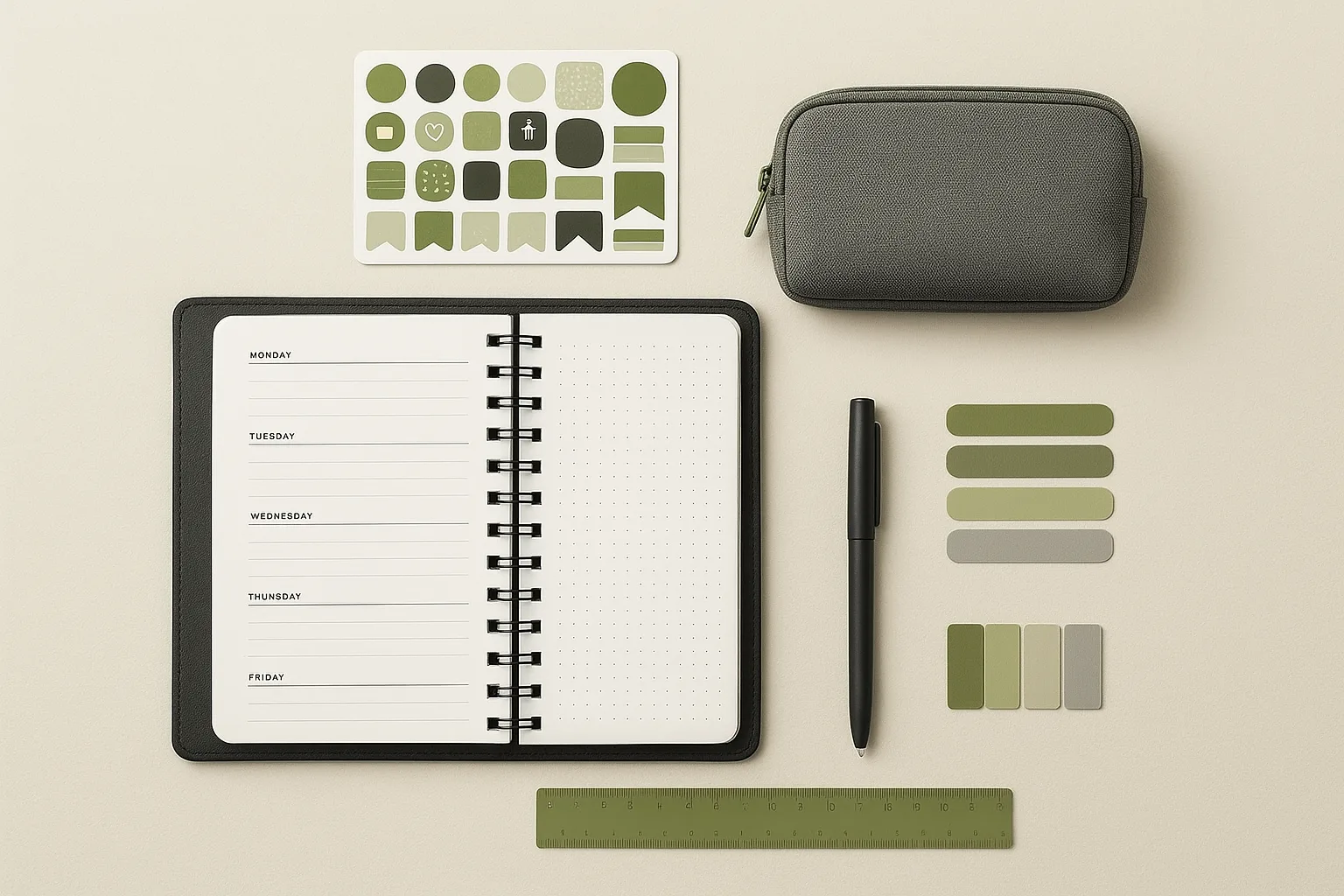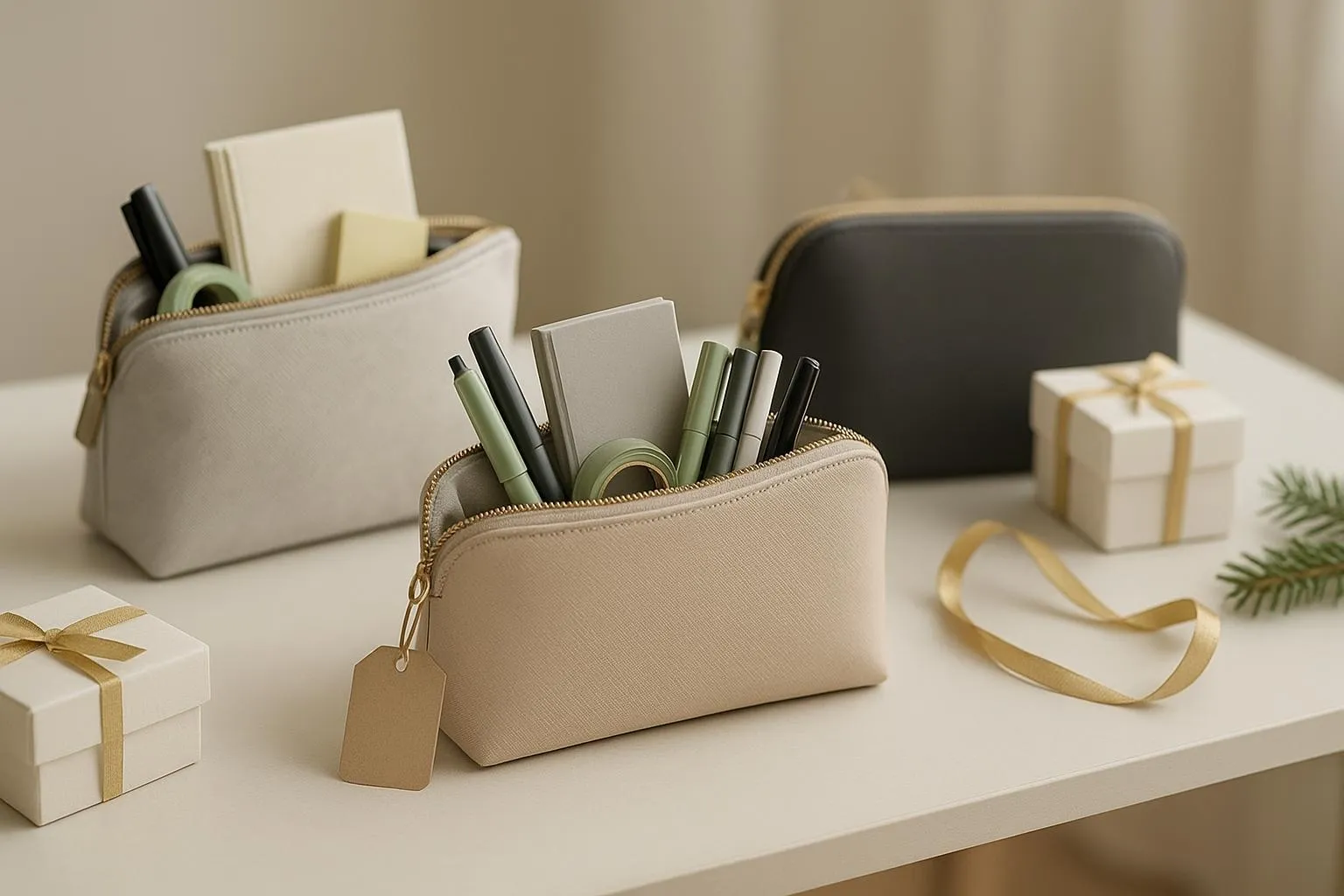
Seasonal gifting loves products that tell a clear story in a small footprint. That’s exactly why cosmetic bags and compact storage pouches pull double duty as multi-use stationery organizers: they bundle pens, mini notebooks, sticky notes, and washi tape into a ready-to-gift moment—perfect for endcaps, checkout trays, and co-branded holiday sets. In this guide, you’ll get retail-ready playbooks, OEM checklists, price-band examples, and replenishment tips to turn pouches into profitable, fast-refresh “kits” for lifestyle retail.
Why this positioning works for lifestyle retailers
Retail performance improves when displays are immersive, disciplined, and seasonal. Experts emphasize vignettes that stop traffic, strong focal points, and layouts built from the shopper’s point of view—principles highlighted by the trade press on visual standards. For example, retail experts outline golden rules such as building depth and aligning with seasonal stories in the comprehensive overview from the industry publication IWD Magazine in the article Golden rules of visual merchandising by retail experts (2024–2026 coverage). See: IWD Magazine — Golden rules of visual merchandising: retail experts.
Endcaps and checkout are high-impact zones for “grab-and-go” kits, where concise signage and lighting earn attention quickly. Display specialists describe 2025 retail display trends that favor cross-merchandised gift packs, sustainability-forward fixtures, and frequent refreshes that match promotion calendars. See: BT Display Group — 2025 retail display trends: what to keep and what to skip.
Timing matters, too. Seasonal shoppers browse earlier than many teams expect, nudging retailers to pull forward drops and displays. The National Retail Federation has reported that nearly half of Halloween shoppers begin purchasing before October, a useful signal for timing “pre-holiday” capsule kits and fall colorways. See: NRF — Nearly half of Halloween shoppers start purchasing items before October (2024).
Bottom line: multi-use cosmetic bags for stationery fit right into this playbook—they’re tactile, giftable, easy to cross-merchandise, and fast to refresh with seasonal graphics and trims.
Seasonal kit blueprints using multi-use cosmetic bags for stationery
Think of this section as your plug-and-play cookbook for a holiday pouch gift set program. Keep assortments tightly edited so choices feel easy, price signage is bold, and each kit communicates the “job to be done” (study kit, journaling on the go, desk refresh).
Two notes as you use the table below:
- MSRP bands are directional anchors—you’ll back-solve exact pricing from your landed costs and desired margins in the Retail Math section.
- Include one “Under $20” option for impulse and one “$30–$45” option for premium gifting.
| Kit name and contents | Suggested MSRP band | Estimated gross margin note | Display suggestion |
|---|---|---|---|
| Study Starter Pouch — flat zip pouch + 3 gel pens + mini sticky note pad | $14–$19 | Entry bundle; low material cost; perfect for checkout trays | Peg hook or tray near notebooks |
| Travel Journaling Set — medium pouch + slim A6 notebook + fine-liner duo + washi tape | $22–$28 | Mid-tier; add value with coordinating prints | Tiered endcap shelf with lifestyle card |
| Desk Refresh Duo — structured pouch + highlighters (3) + sticky tabs + mini scissors | $26–$34 | Mid/high; structure adds perceived value | Eye-level cube with lighting |
| Creative Gift Kit — premium PU/canvas pouch + A6 dot-grid + brush pen set (3) + washi (2) | $34–$45 | Premium; margin from curated look and packaging | Boxed set with sleeve and bow |
Tip: rotate color stories every 6–8 weeks; swap a pen set or insert to refresh the kit without rebriefing the entire assortment. It’s a simple way to keep multi-use cosmetic bags for stationery feeling new without reworking your planogram.
Cross-merchandising and display tactics that lift sell-through
Small footprint, big impact. Use these tactics to turn pouch kits into fast-moving features.
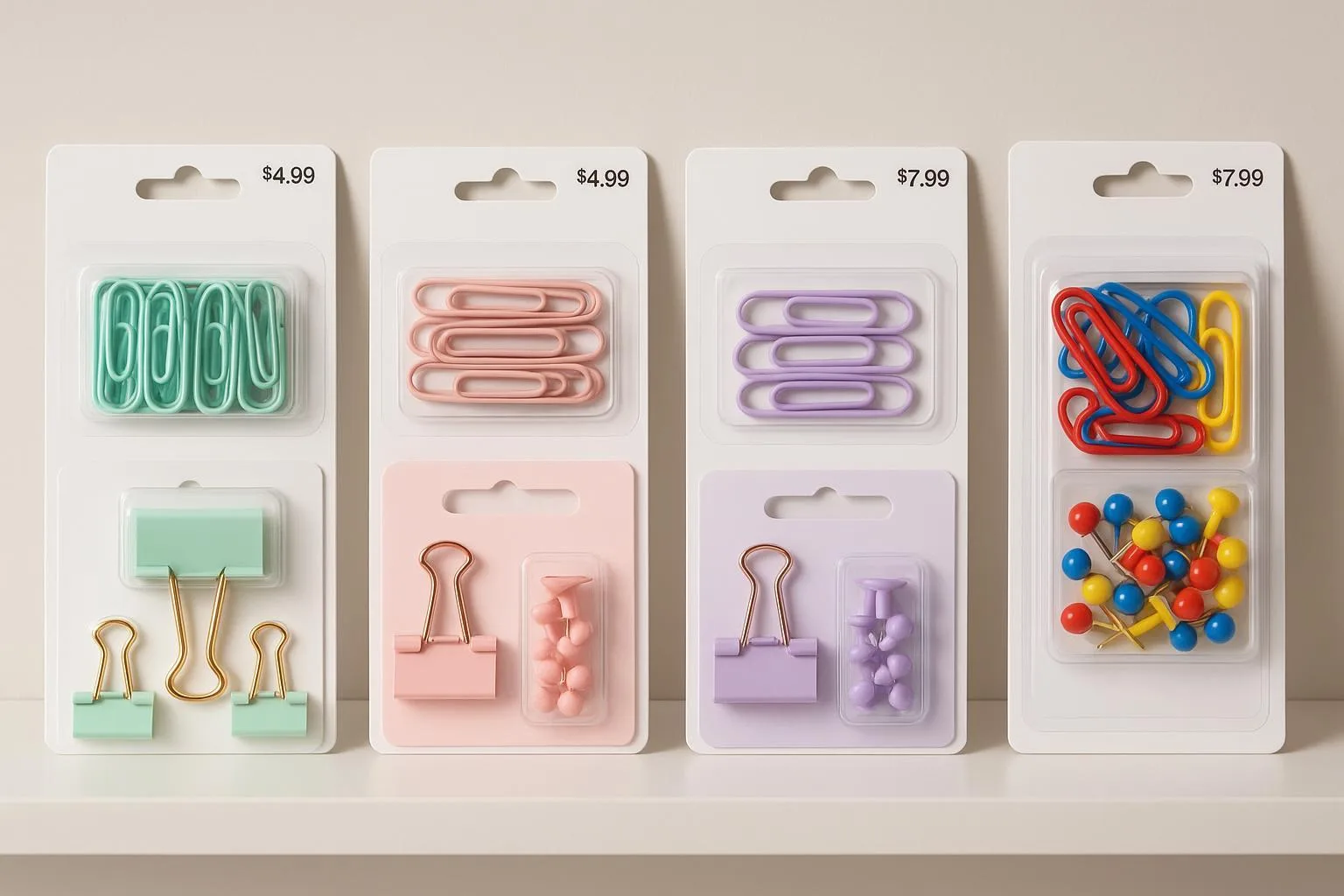
- Place one entry-price kit at checkout and one mid-tier kit at the endcap focal zone; keep price cards legible from 6–8 feet. Guidance on high-impact endcaps and concise messaging aligns with 2025 trends outlined by display specialists (see BT Display Group link above).
- Create lifestyle vignettes (“Back-to-campus,” “Travel journaling,” “Gifts under $25”) and echo the color story across the pen set, pouch trim, and gift sleeve—a best practice consistent with visual-merchandising rules highlighted in IWD Magazine’s expert roundup.
- Let shoppers touch textures. Provide one tester pouch per style; tactile engagement often increases conversion for soft goods.
- Use capacity-driven facings: if the tray holds 12 units and your target is 5–7 turns in peak weeks, stock to capacity and set automated reorders when on-hand dips below 1.5 trays.
Here’s the deal: clarity beats choice. A tidy display with two price anchors and one premium option gives shoppers confidence—and helps staff keep zones clean during rush periods.
Retail math that preserves margins (and sanity)
Retailers rarely struggle to find great-looking kits; the challenge is pricing and inventory that hold margin during peak weeks. Use this simple framework to back-solve MSRP from landed cost.
- Start with landed cost (LC), including product + inbound freight + duties (if applicable). Decide your target initial markup (IMU%).
- Example, entry tier: If LC = $6.00 and you aim for 55% gross margin, your MSRP target is roughly MSRP = LC / (1 – GM) = 6.00 / 0.45 ≈ $13.33; round to $14.99.
- Example, mid tier: If LC = $10.50 at a 58% margin target, MSRP ≈ 10.50 / 0.42 ≈ $25.00.
Directional market anchors help sanity-check your tiers. For entry-level synthetic or clear pouches in U.S. mass specialty, many items fall under $20, consistent with product pages like Target’s clear and fabric models in the Sonia Kashuk line (one representative example linked). See: Target — Sonia Kashuk makeup bag example (~$10–$20 range). A mid-boutique cosmetic bag at Anthropologie recently listed at $39 (often promotional), useful as a premium anchor. See: Anthropologie — Shiraleah x Anthropologie cosmetic bag example (~$39).
- Preserve margin with kit design
- Add perceived value with minimal COGS creep: printed sleeve, coordinated washi, or a seasonal hangtag often beats upgrading to heavy hardware.
- Keep case-packs aligned with display capacity (e.g., 12s for trays, 24s for endcap shelves) to reduce partial boxes in back stock.
- Replenishment planning
For seasonal goods, blend push (initial set) with pull (demand-driven reorders). Inventory operations resources recommend Open-to-Buy discipline and automated reorder points that reflect peak-weeks velocity and lead times. See: Shopify — Open-to-Buy plans and seasonal inventory management.
When you map this to multi-use cosmetic bags for stationery, set reorder triggers by zone: checkout trays often warrant tighter, faster reorders than mid-aisle endcaps. If lead time risks a stockout inside your peak window, front-load a safety case-pack.
OEM/ODM sourcing and customization: getting OEM cosmetic pouch MOQ right
Customization unlocks brand equity—but it has implications for MOQs, lead times, and cost. Treat public ranges as directional and confirm specifics in quotes and sampling.
| Customization scope | Directional MOQ range | Directional lead time notes | Example/reference notes |
|---|---|---|---|
| Stock pouch + logo (print/transfer) | 200–500+ units | Samples ~7–10 days; bulk often 20–45 days depending on print slot | Some OEMs publicly note low starting MOQs and short sample windows; see indicative ranges in a guide to zipper cosmetic bags (UniversePack, 2025). UniversePack — step-by-step zipper cosmetic bag guide |
| Custom color fabric + logo | 500–1,500+ units | Allow fabric dye/print time; bulk commonly 30–60 days | SKU listings on global marketplaces show MOQs from ~500 to 3,000 with 30–60 day windows; specific values vary by factory and spec. Example page: Global Sources — Toiletry bag example (MOQ and lead time) |
| New silhouette or complex construction | 1,000–2,000+ units (or sets) | Add mold/tooling/sample approval; bulk can exceed 45–60 days | Amenity kit set examples sometimes publish MOQs of 5,000 sets with 15–20 day claims; verify feasibility against your spec. Example page: Global Sources — Amenity kit listing (MOQ and lead time) |
Caveat: Few authoritative public pages break out MOQs/lead times precisely by “stock + logo” vs. “custom print” vs. “new mold.” Use the table as a conversation starter with suppliers, not a promise.
RFQ/spec checklist (use this as your email or form template):
- Base material and lining (PU, rPET, canvas, nylon), zipper spec, and hardware finish
- Print/branding method (screen, heat transfer, sublimation, embroidery, deboss/foil) and coverage
- Color tolerances, stitch density, foam/interlining, water-resistant coatings
- Packaging (hangtag, sleeve, gift box), UPC/labeling needs, and carton specs
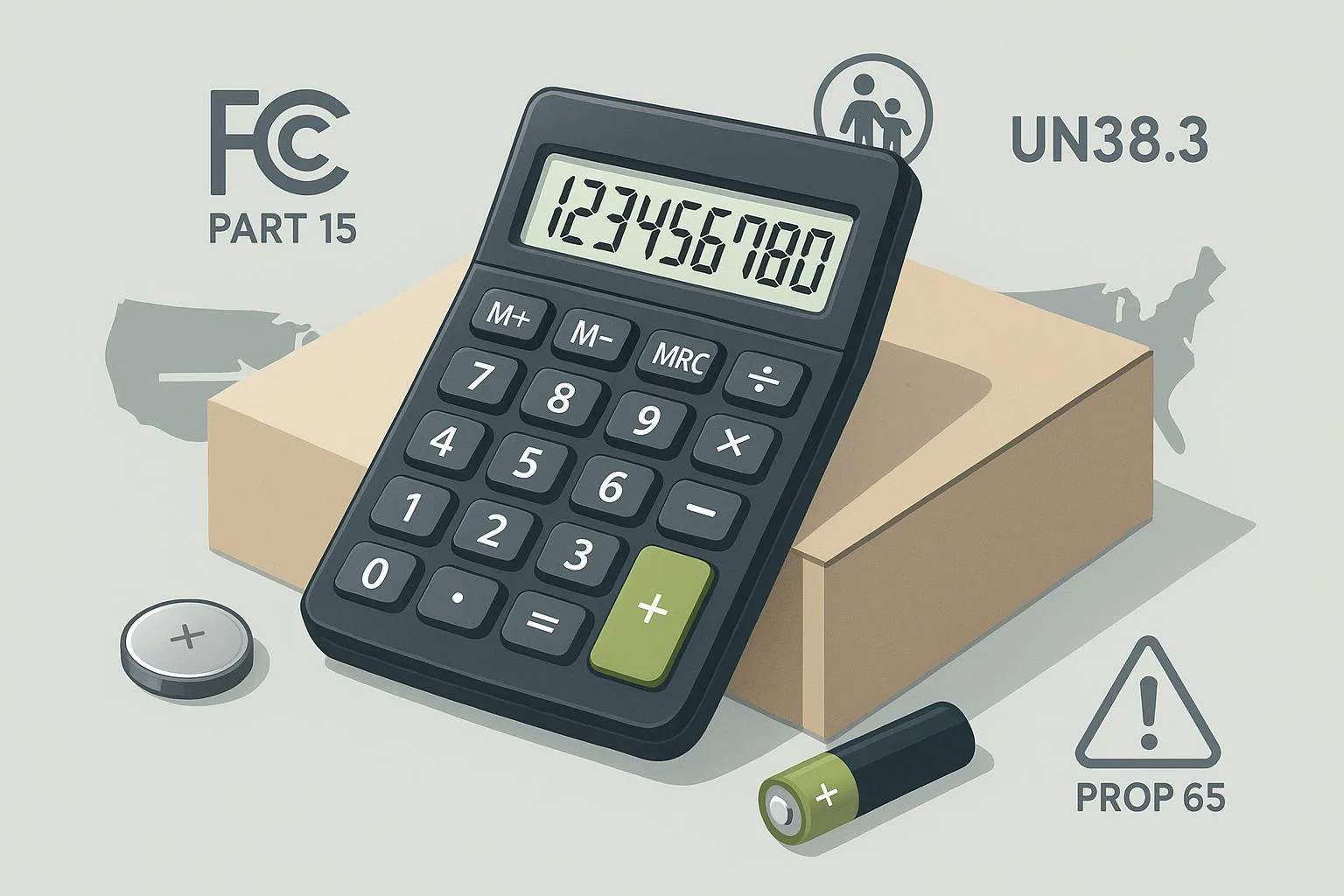
- Compliance and audits: CPSIA where child-directed; California Prop 65 warning assessment for U.S. markets; REACH for EU; quality and social audits (e.g., ISO 9001, amfori BSCI). For import compliance context, see CPSC — e‑filing and certificates for imported consumer products (final rule) and OEHHA — Proposition 65 overview.
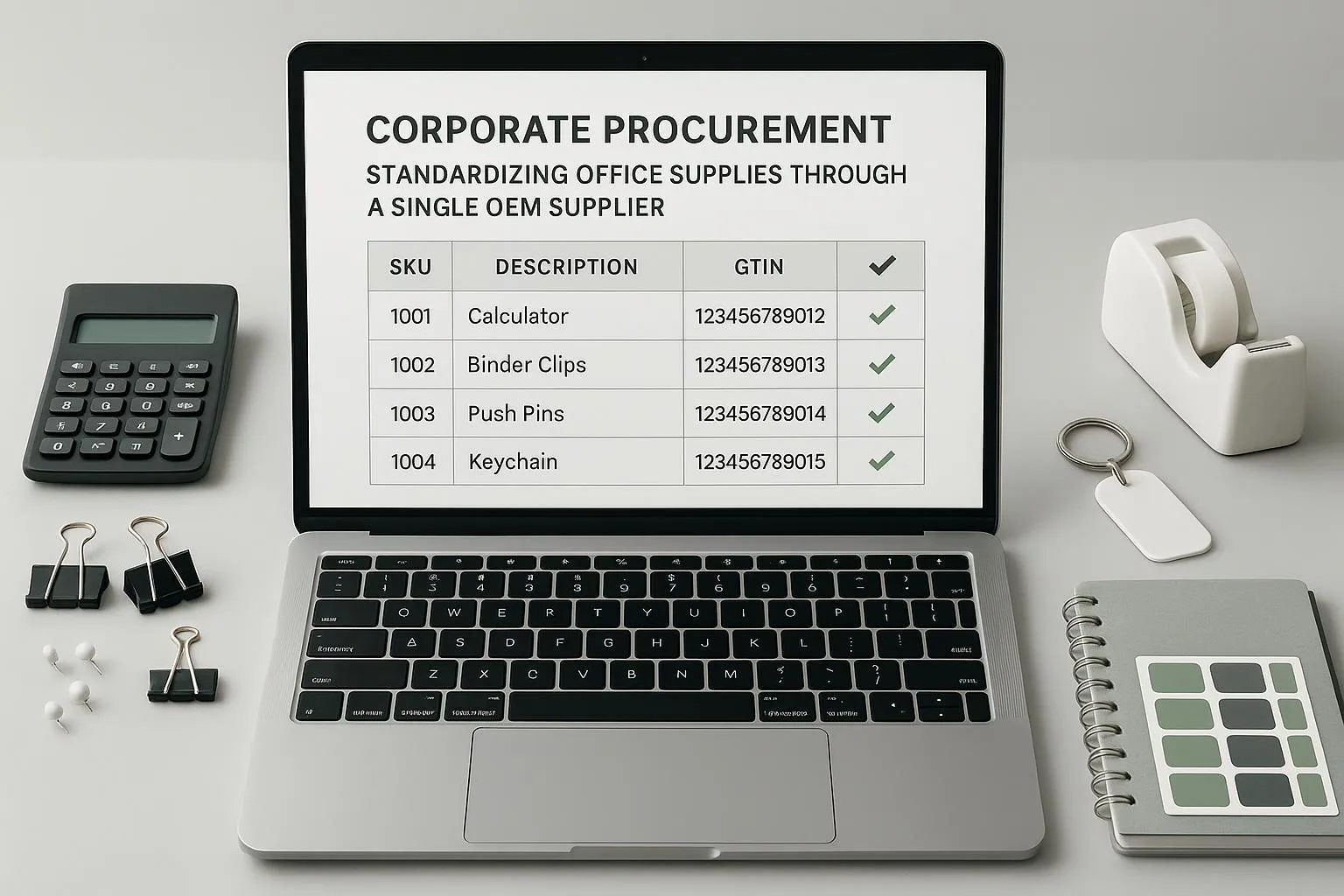
Practical example with disclosure: Disclosure: Shinyyou is our product. For retailers seeking a co-branded pouch-plus-stationery kit, an OEM partner like Shinyyou can quote multiple material options (e.g., PU vs. canvas vs. rPET), propose efficient print methods by artwork coverage, and align case-packs to your display capacity. The value is in translating your seasonal story into a spec that preserves margin—sampling is where that alignment gets proven.
Mini case snapshots (anonymized)
Boutique holiday capsule
A 12‑store lifestyle chain built a November “Gifts under $25” vignette around two kits: an entry Study Starter Pouch and a mid Travel Journaling Set. They color-matched pouch trims, pen barrels, and the sleeve art. Staff kept trays full at checkout, and the endcap carried the story with a single lifestyle card and bold price blocks. Takeaway: consistent story + clear price anchors made choices easy during peak weekends.
E‑commerce bundle A/B
A DTC stationery brand tested a Desk Refresh Duo with and without a gift sleeve. The version with a minimal sleeve (no hardware upgrade) outperformed the control and reduced returns by clarifying contents. Takeaway: add perceived value through presentation before upgrading costly components.
What to do next (and how to measure it)
- Build a three-tier kit line-up: one impulse (Under $20), one mid gift ($22–$28), and one premium ($34–$45). Map color stories across trims and inserts so your multi-use cosmetic bags for stationery read as a family on the shelf.
- Draft an RFQ using the checklist above; request quotes for two materials and two print methods per kit to compare COGS and MOQs. Ask for a sample timeline that protects your launch window.
- Plan replenishment triggers by zone (checkout vs. endcap), and sanity-check margins with the back-solve method before finalizing MSRP. If a risk of stockout exists in peak weeks, pre-build a safety case-pack.
If you’d like help translating a seasonal brief into specs you can order, request the Stationery Pouch Kit Spec Pack (sample spec sheets and a simple MOQ/lead-time cheat sheet) or ask for samples to trial fit and finish.
—
Author: Retail Merchandising & OEM Advisor
I help lifestyle retailers and brands turn soft-goods and stationery concepts into margin-preserving kits through practical merchandising and OEM workflows.