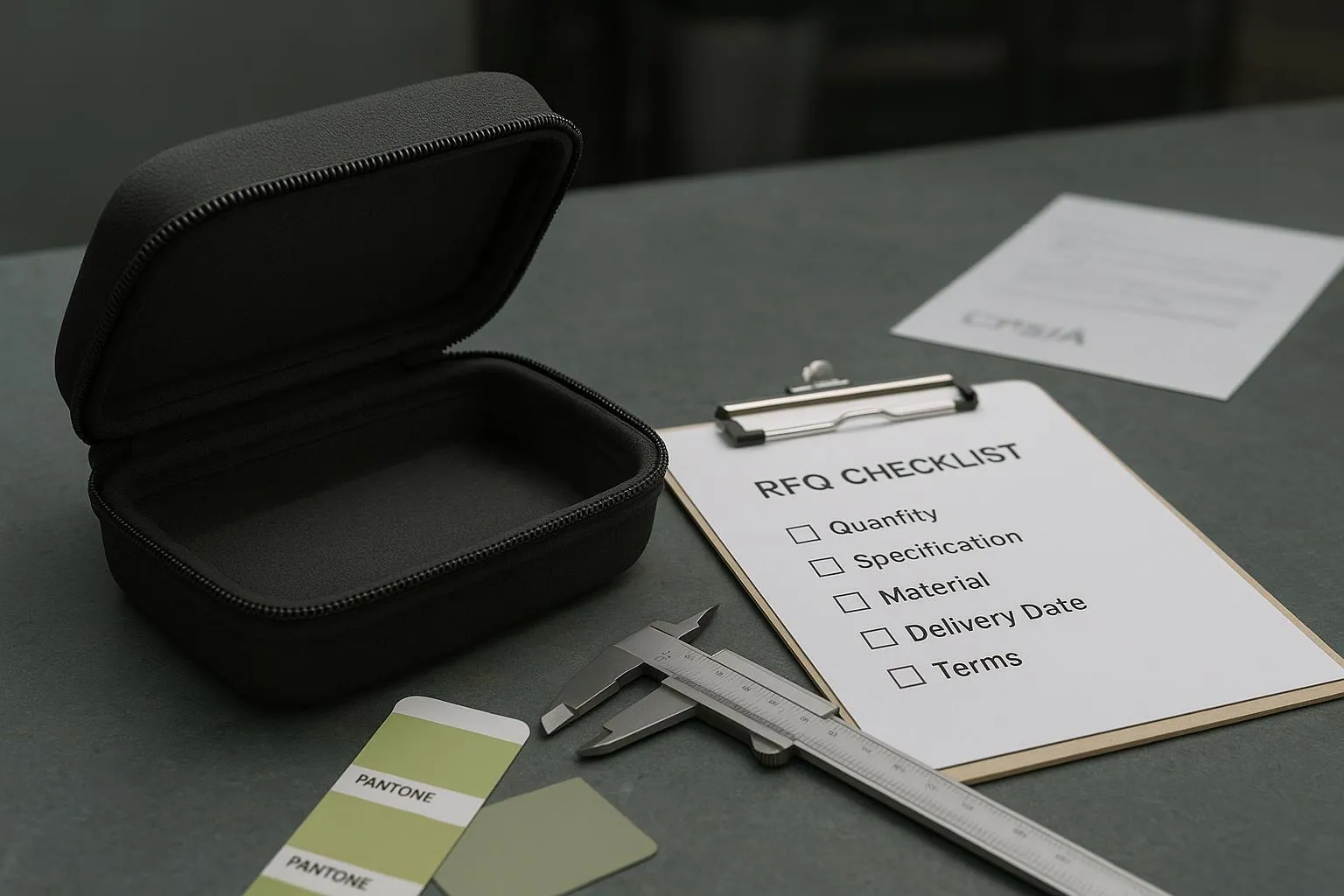
If you need a supplier-ready RFQ you can paste into an email or platform right now, this guide is for you. It’s designed for semi‑custom builds using existing molds—change materials, finishes, logos, and packaging—while keeping U.S. compliance in view. Use the one‑page block below as your master “RFQ checklist for custom pencil cases,” then scan the quick notes that follow to avoid the common compliance and cost traps.
One‑page RFQ checklist for custom pencil cases
Copy, paste, and fill the blanks. Mark any non‑applicable line “N/A.” Keep the [R]/[O] tags when you send it so suppliers know what’s mandatory.
SECTION A — PRODUCT SPECS
[R] Product type: Pencil case (EVA hard shell / fabric) — semi‑custom on existing mold ID ________
[R] Intended audience & age grading: General school use, age ____+; NOT marketed as a toy
[R] Dimensions & tolerances: L ____ × W ____ × H ____ mm; tolerance ± ____ mm; target weight ____ g
[R] Outer shell (if EVA): Thickness ____ mm; Shore A ____; density ____ g/cm3; surface finish (matte/gloss/texture) ________
[O] Lamination/outer material: PU / PVC‑free option / fabric (specify) ________
[R] Color standard: Pantone ________; color variance ΔE ≤ ____; color migration control required: Yes / No
[R] Liner: Material (polyester/nylon) ________; weight ____ gsm; color ________
[R] Zipper: Type (coil/metal/vislon) ________; size #____; tape/pull color ________; puller design (no detachable small parts for 3+) ________
[O] Hardware finish policy (e.g., nickel‑free per buyer policy): ________
[R] Branding/artwork: Method (silkscreen/transfer/deboss/patch) ________; color count ____; art file (AI/PDF) provided: Yes / No
[O] Odor/VOC target: No strong odor on arrival; provide VOC/odor test if required (method/spec) ________

SECTION B — COMPLIANCE (U.S. MARKET)
[R] Children’s product status: Yes / No (if Yes, apply CPSIA rules below)
[R] Lead — total in substrate (15 U.S.C. §1278a): Must comply; provide latest test report
[R] Lead in paint/surface coatings (16 CFR part 1303): Must comply; provide latest test report (each paint/ink color if applicable)
[R] Tracking labels (15 U.S.C. §2063(a)(5)): Permanent marks on product AND retail packaging; include content & placement here: __________
[O] Phthalates (16 CFR part 1307): Applicable only if toy/child‑care article; status for this item: Applicable / Not applicable
[R] Third‑party testing: CPSC‑accepted lab name ________; report date (within last ____ months) ________; files to be supplied with PP sample
[R] CPC: Issuer ________; rules cited ________; lot/batch identification scheme ________
[R] Prop 65: Strategy — Warning to be applied / Materials control to avoid warning; documentation to be provided: ________

SECTION C — PACKAGING & LABELING
[R] Country of origin: Marking text ________ ; placement on product/pack ________
[R] Retail barcode: Type (EAN/UPC) ________; placement ________
[R] Polybags (if used): Bag size ____ × ____ mm; thickness ____ mil; suffocation warning language & font size per buyer guidance to be printed; vent holes: Yes / No
[R] Tracking label on retail pack: Content ________; placement ________
[O] E‑commerce readiness: ISTA 3A / ISTA 6‑Amazon pre‑shipment test required: Yes / No
[O] Carton spec: Inner/outer pack counts __ / __; single carton dimensions ____ × ____ × ____ cm; max gross weight ____ kg

SECTION D — TESTING, SAMPLES & QC
[R] Samples: Material swatch / EPS / pre‑production sample (choose); quantity ____; ship date ____; courier account ________
[R] Color/print re‑test rule: Re‑test for each distinct paint/ink color: Yes / No
[R] Inspection plan: ISO 2859‑1, General Level II; AQL Critical __ / Major __ / Minor __; inspection stage (DUPRO/PSI) ________
[O] Function/durability targets: Zipper cycle ____ cycles; drop/dent test for EVA shell — height ____ cm, passes ____/____ units

SECTION E — LOGISTICS & COMMERCIALS
[R] MOQ tiers (by color/design): ____ pcs @ $____; ____ pcs @ $____; ____ pcs @ $____
[R] Lead times: Sample ____ days; mass production ____ days after PP approval
[R] INCOTERMS & port: EXW / FOB ________ / CIF ________
[R] Payment terms: ________
[O] Warranty/defect handling: RMA/credit policy ________; allowable field defect rate ____%

SECTION F — SUPPLIER ATTACHMENTS (MANDATORY WHERE CHECKED)
[R] Latest test reports (lead substrate; lead in paint; others as applicable)
[R] Photos of tracking labels (product + retail pack)
[R] Material declarations (e.g., PVC‑free, phthalate status)
[O] Factory info (address, audits last 3 years)
[O] BOM with material sources & finishes
Quick compliance notes for U.S. importers
Start with age grading. If you market the case primarily for children 12 or under, it’s a children’s product under CPSC’s interpretive rule, which triggers children’s testing and certification duties. The Commission explains the four‑factor test for children’s products in its Final Interpretive Rule and guidance; see the CPSC overview on children’s products for practical implications and examples.
- According to the CPSC’s Children’s Products overview, children’s products require testing at CPSC‑accepted labs and a Children’s Product Certificate before sale. Review the Commission’s plain‑language summary in the CPSC’s Children’s Products page to align your RFQ language.
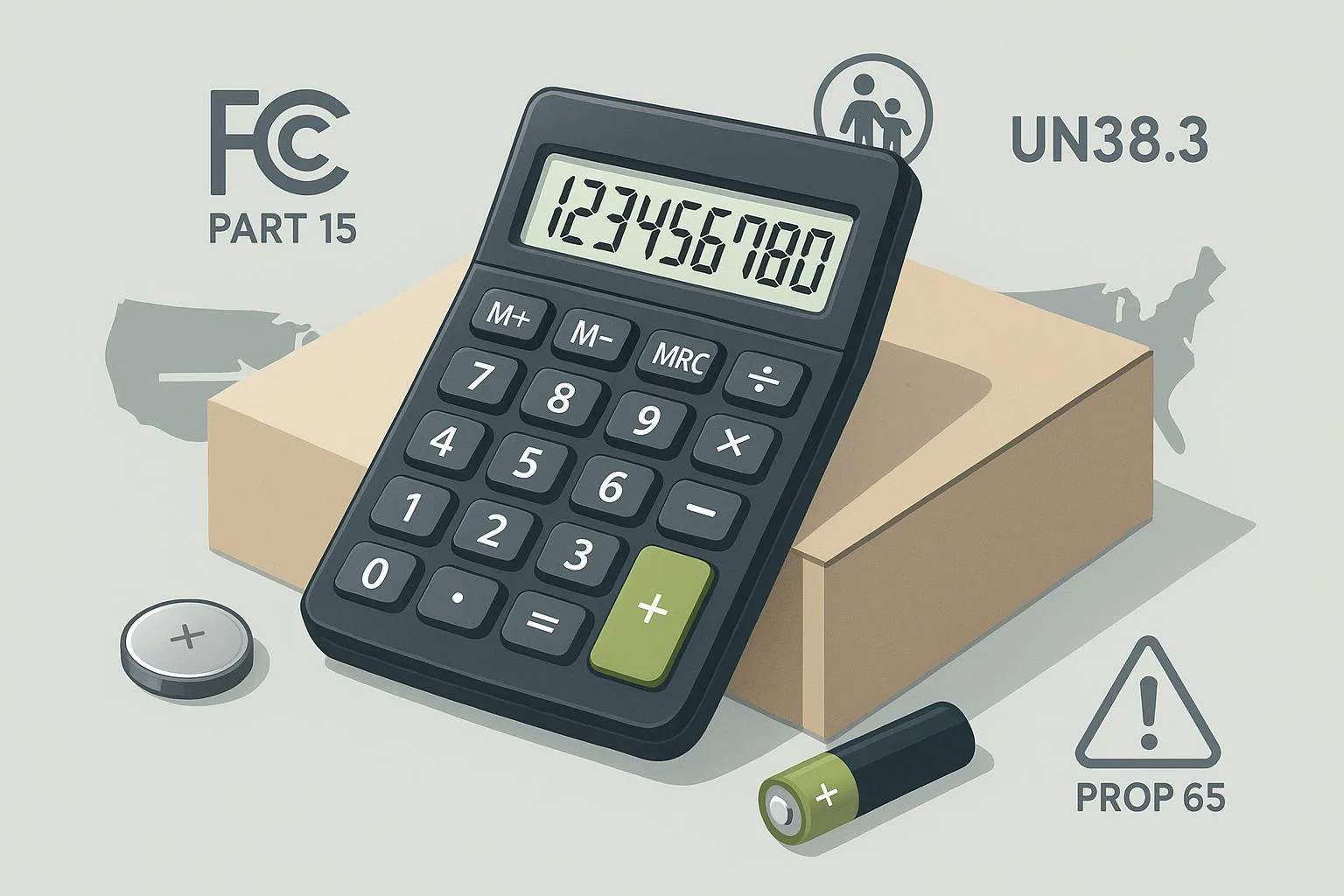
- Lead limits come in two flavors. Total lead in accessible substrates is capped by statute; CPSC’s Total Lead Content FAQ outlines the 100 ppm rule and exemptions. Separately, painted or printed surfaces must meet the 90 ppm “lead in paint” limit in 16 CFR part 1303 as the agency details in its Lead in Paint business guidance.
- Tracking labels are often missed. The law requires permanent distinguishing marks on both the product and its packaging that help trace the batch and manufacturer. CPSC’s Tracking Label FAQ provides practicability guidance and examples you can mirror in your artwork notes.
- Third‑party testing and the CPC go together. Your RFQ should ask for a CPSC‑accepted lab name, test scope per color if inks differ, report date, and a CPC that cites each applicable rule. The CPSC’s CPC page provides a model of what the certificate must contain.
- Prop 65 is a separate California regime. You can either manage materials to avoid warnings or apply compliant warnings when exposure may exceed safe harbors. OEHHA’s clear‑and‑reasonable warnings page summarizes the safe‑harbor methods and the 2025 short‑form updates so your packaging copy stays current.
- Polybag warnings vary by state and retailer policy. Because statutes differ, many importers adopt a conservative warning, minimum font sizes, and vent‑hole practices that meet or exceed major state expectations; confirm your exact wording during artwork review.
- Selling online? Consider e‑commerce packaging tests like ISTA 3A or 6‑Amazon to reduce in‑transit damage for parcel networks. The ISTA 3A resources outline the baseline sequence and performance criteria.
Citations and authoritative resources:
- See the CPSC’s Children’s Products overview for testing and certification duties: CPSC Children’s Products overview
- Substrate lead limit summary: CPSC Total Lead Content FAQ
- Lead in paint rule: 16 CFR part 1303 and CPSC guidance
- Tracking labels requirement: CPSC Tracking Label FAQ
- CPC content and examples: CPSC Children’s Product Certificate
- California warnings: OEHHA clear and reasonable warnings
- Parcel test baseline: ISTA 3A resources
Cost, MOQ, and lead‑time levers for semi‑custom builds
Want to keep quotes tight without surprises later? Think of costs as a stack of levers you can set in the RFQ so suppliers price apples to apples.
- Materials and finishes: EVA shell thickness, Shore hardness, and outer lamination drive both look and cost. Thicker shells and textured finishes cost more; so do multi‑color prints. If you’re on a budget, standardize to one Pantone and one print hit per side.
- Mold reuse vs new tooling: Semi‑custom on existing molds avoids tooling fees entirely. If you do need a minor insert or puller mold, ask suppliers to break out any tooling and propose an amortization plan (e.g., a per‑unit surcharge until a cap is met).
- MOQ tiers by color and design: Ask for three tiers (for example, 500/1,000/2,000 pcs) so you can model unit price curves. Separate color MOQs from total order MOQs to avoid over‑ordering a slow colorway.
- Sampling plan: Request material swatches first, then a pre‑production sample that includes final zipper, liner, and artwork. Tie lead time to “PP approval” in your RFQ to keep the schedule clear.
- Lead times: Typical semi‑custom runs land in the 30–45 day range after PP approval, with samples in 7–14 days depending on art and materials availability. Confirm any peak‑season impacts up front.
- Quality expectations: Specify ISO 2859‑1 inspection level and AQLs so factories know your acceptance bar before they price. For EVA hard shells, you can add a simple drop/dent check and a zipper‑cycle target.
Tip: Include the primary “RFQ checklist for custom pencil cases” block exactly as shown. The clearer your baseline, the fewer “clarification loops” and re‑quotes you’ll face.
Practical workflow example for EVA hard case
Here’s how a smooth first exchange often looks: you send the RFQ block with your mold ID and Pantone; the supplier replies with EVA thickness and Shore options, liner swatches, and a zipper spec, plus existing test reports and tracking‑label mockups.
Disclosure: Shinyyou is our product. For example, Shinyyou can confirm existing mold IDs, propose EVA/liner pairs, and return a compliance‑ready PP sample timeline without changing your RFQ format.
Next steps
- Paste the one‑page block into your RFQ message, attach your vector artwork (AI/PDF), list Pantone references, and include any retailer routing guides that affect polybag warnings and carton marks.
- Ask the supplier to reply in‑line under each line item and attach: current lab reports for lead (substrate) and lead in paint, tracking‑label photos, material declarations (e.g., PVC‑free), and their AQL/inspection plan. One consolidated thread reduces misses.
- If you sell online, request an ISTA 3A quote option and have the supplier confirm the outer‑pack limits (carton size/gross weight) so your fulfillment network stays happy.
- Ready to move? Request pre‑production samples first, then trigger third‑party tests only after you approve the PP sample artwork and materials. That’s how you avoid paying to test the wrong thing.
A clean, supplier‑proof RFQ isn’t fancy—it’s specific. Use the “RFQ checklist for custom pencil cases,” keep your compliance anchors tight, and you’ll get faster, sharper quotes with fewer surprises.