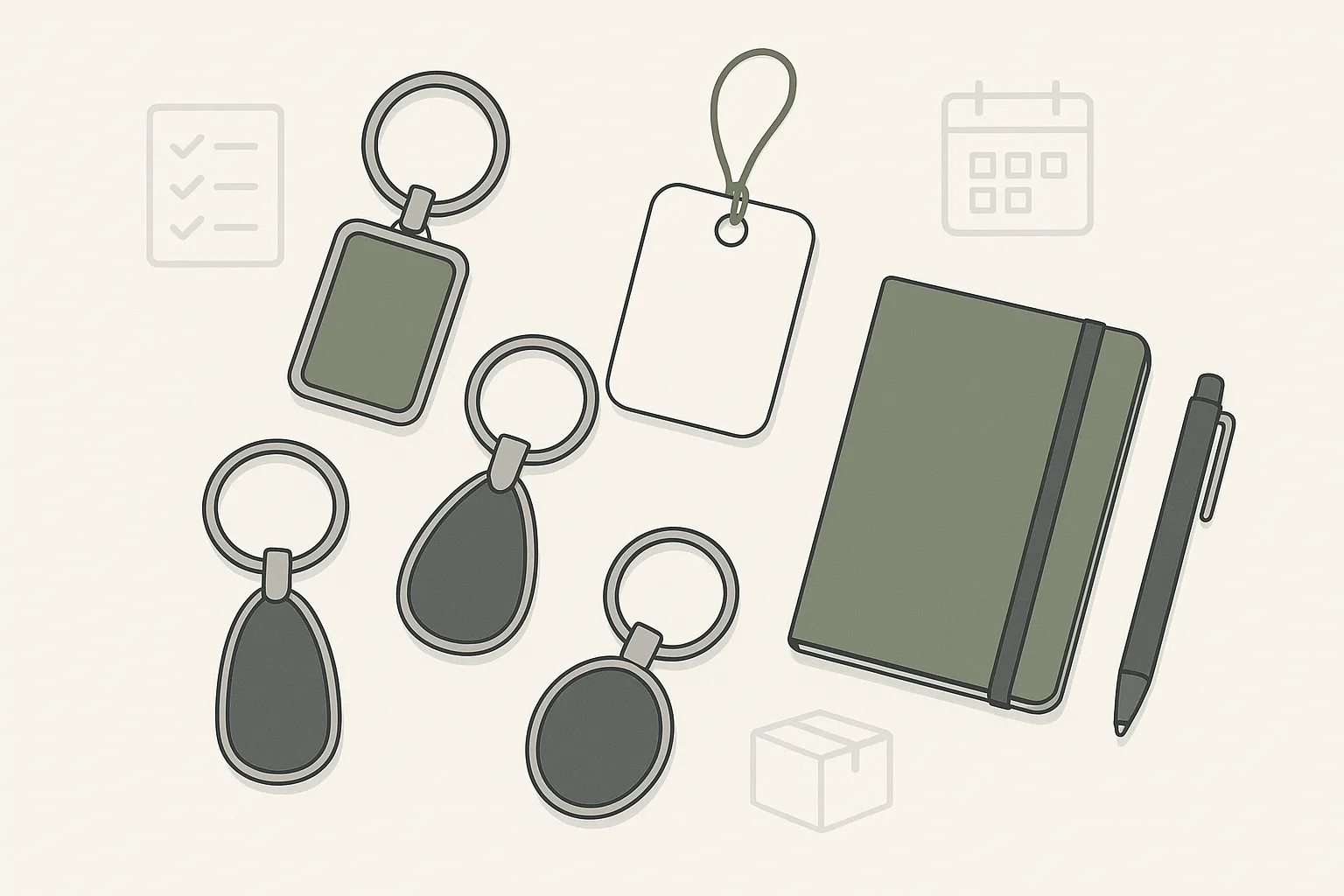
Keychains sit in a useful middle ground for promotional programs: they’re small enough to ship cheaply, tangible enough to feel like a real gift, and flexible enough to pair with notebooks, pens, pouches, or tech accessories.
For promo buyers, that “small accessory” label is also where risk hides. A keychain can be a high-retention add-on—or it can become a returns problem when plating rubs off, branding scuffs, packaging arrives wrong, or documentation doesn’t match your client’s compliance requirements.
This guide is written for procurement-minded promo teams buying in the 2,000–10,000 set range who need a repeatable way to spec, source, and deploy promotional keychains without surprises.
When promotional keychains work (and when they don’t)
Keychains earn their keep when they meet three campaign realities:
High “keep rate”: people don’t throw them away after the event.
Low distribution friction: they’re easy to include in kits, mailers, and conference handouts.
Branding durability: the logo survives real-life handling (keys, bags, pockets, car interiors).
They underperform when the item is too generic, too flimsy, or too loudly branded to feel like something the recipient would keep. The best programs treat keychains as a supporting item—an accessory that reinforces the main gift rather than trying to carry the whole impression on its own.
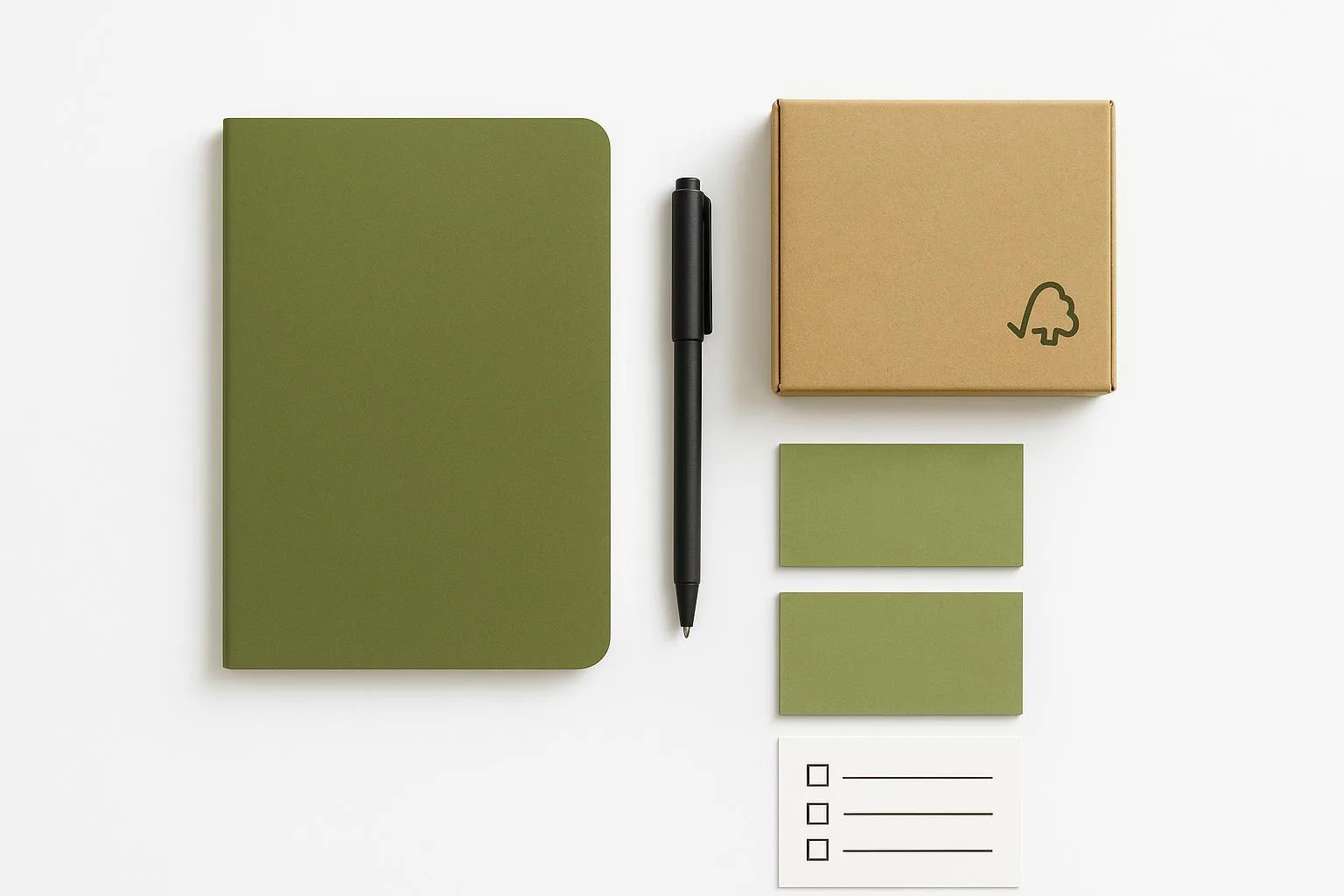
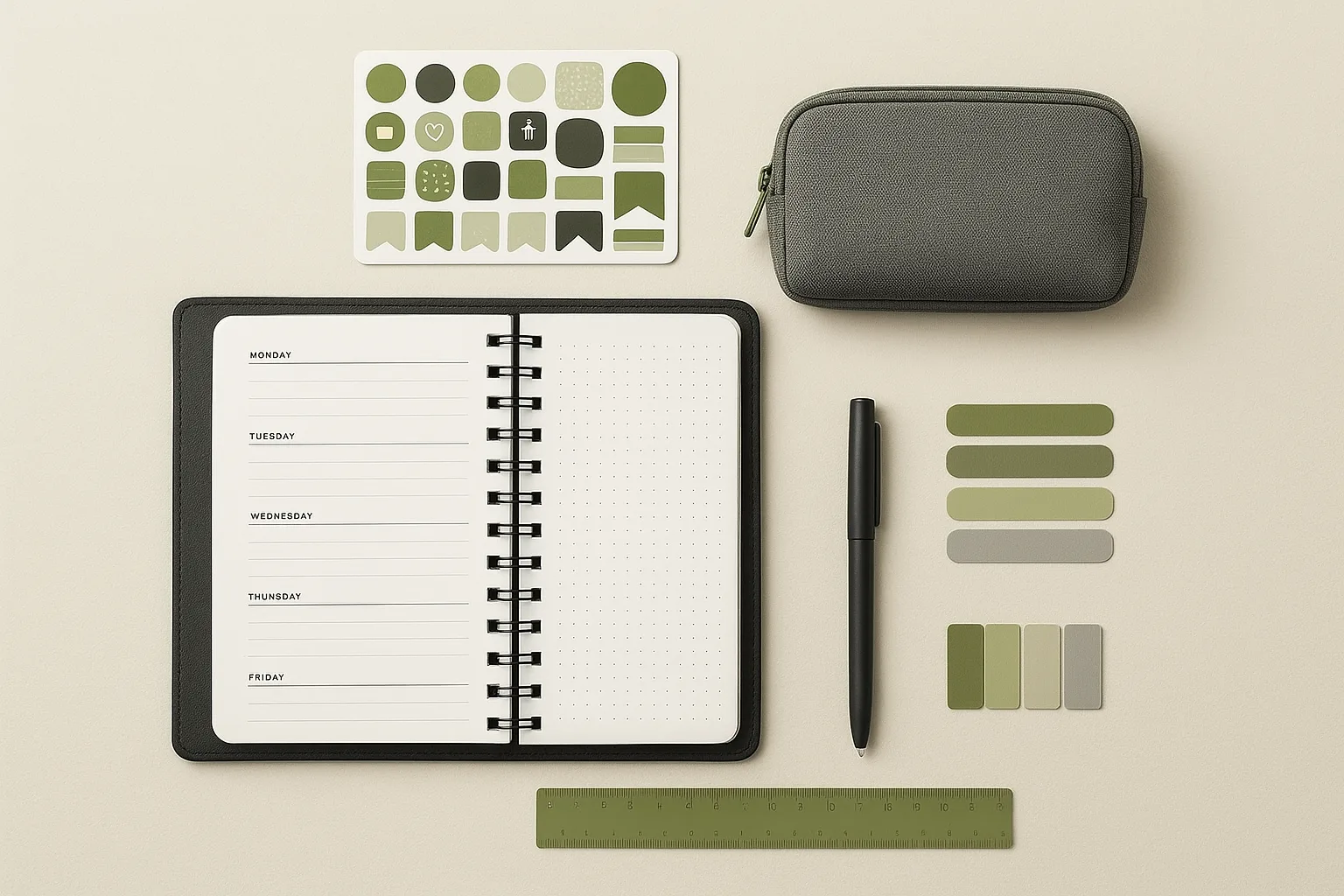
Pro Tip: If your primary gift is a notebook/pen set, choose a keychain that “belongs” in the same everyday context—clean shapes, durable finish, and packaging that doesn’t look like an afterthought.
4 campaign patterns where small accessories earn budget
In practice, a promotional keychain giveaway works best when it’s tied to a clear moment: badge pickup, demo completion, store opening, or a mailer that arrives two weeks before the event.
1) Trade shows and conferences (booth traffic + post-event retention)
Keychains work here because they’re easy to pick up, easy to carry, and easy to keep. The main decision is whether you’re optimizing for volume (wide distribution) or selectivity (a better item for qualified conversations).
A practical swag benchmark is usefulness: the more the item solves a small daily annoyance, the longer it stays in circulation. Swag.com emphasizes usefulness, tasteful branding, and shipping/kit logistics in its conference swag guidance—see their rundown of conference swag ideas that people actually keep.
2) Employee onboarding and internal recognition kits
A keychain becomes “stationery-adjacent” when it’s bundled with an organizer pouch, notebook, pen, or desk accessory. The win is consistency: every new hire or award recipient gets the same complete kit, and the keychain acts as the durable carry-along token.
3) Direct mail and virtual/hybrid event fulfillment
When shipping cost and damage risk matter, keychains are a strong filler item—especially when you need a kit to feel substantial without adding weight. Packaging spec matters more than the keychain design: if the presentation arrives scuffed, the campaign feels cheap regardless of the item.
4) Retail add-ons and brand-store bundles
For brand stores and seasonal packs, keychains can lift AOV when they’re positioned as a “bonus” item in a themed set. The procurement question is not “is it cute?”—it’s “will the finish and attachment survive real usage long enough to protect the brand?”
The procurement spec sheet: what you should decide before you request quotes
If you want consistent pricing and fewer surprises, write your spec before you ask suppliers to quote. For custom keychains, the variables below drive both cost and risk.
Material and finish (durability + perceived value)
Start with the conditions the item will face: abrasion (keys), heat (car), humidity, and constant handling. Then align the material to the role the keychain plays in your kit.
Metal: higher perceived value; finish quality and edge handling matter
Soft PVC / rubber-like materials: good for bright colors and playful shapes; evaluate scuffing and odor risk
Acrylic: clear color options; verify scratch resistance and print adhesion
Leather / PU: premium feel; verify edge paint durability and stitching consistency
Instead of asking “what’s most popular,” ask “what survives the way recipients actually use it?”
Attachment system (the part that fails first)
A keychain can look great and still fail if the attachment is weak. Specify:
key ring size
chain length (if any)
connector type (split ring, lobster clasp, carabiner, strap loop)
load expectation (keys only vs. keys + accessories)
Branding method (how the logo holds up)
Your branding method should match the surface and the handling pattern. Define:
1-color vs multi-color
placement (front-only vs double-sided)
tolerance (how much variation is acceptable across batches)
artwork file requirements (vector, Pantone, etc.)
Packaging and kitting
Packaging is where landed cost quietly climbs—especially when you’re bundling with stationery items. Decide early:
individual polybag vs paper card vs gift box
whether the keychain is attached to a backer card
barcode/label requirements
whether the supplier assembles the kit or ships components separately
Compliance and documentation: what promo buyers typically request
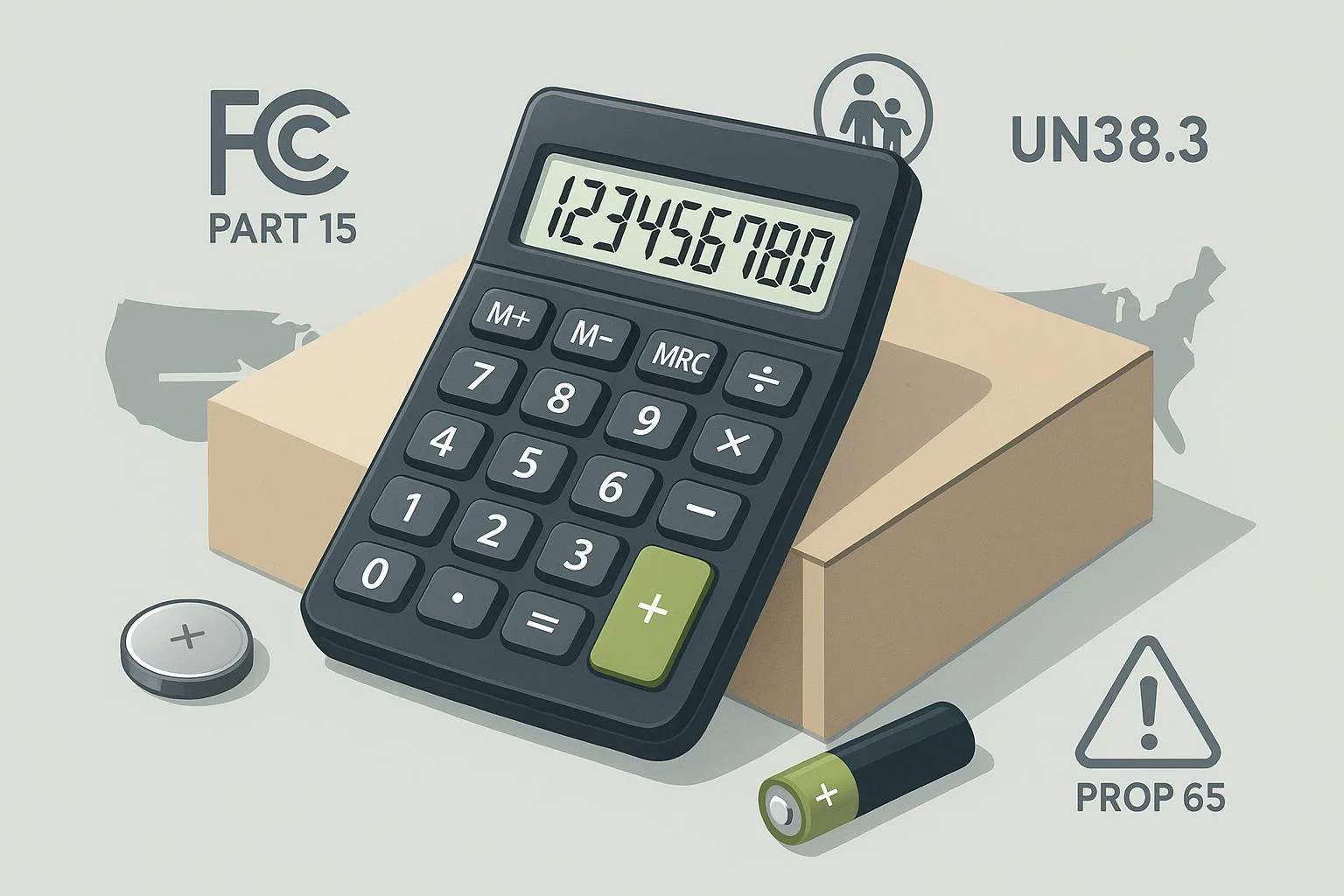
If your campaigns touch regulated categories (children’s distribution, healthcare settings, public-sector clients, or strict corporate compliance teams), documentation becomes a gating item.
Use a “documentation-first” approach: ask what the supplier can provide before you lock the PO and timeline.
Common buyer requests include:
material declarations
test reports from recognized labs (where required by the market/client)
traceability info for materials/production lots
social compliance / factory audit evidence
packaging and labeling confirmations
One practical note: Shinyyou positions its OEM stationery supply around customization, MOQ guidance, lead-time ranges, and compliance posture on its product category pages, including the keychain listing under Office Supplies. Use this as a starting point, then align the exact documentation set to your client’s requirements and your compliance team’s guidance.
⚠️ Warning: Don’t treat compliance as a post-quote add-on. If documentation is required, it affects lead time (sampling/testing) and can change which materials or finishes are acceptable.
Timeline control: sampling, pre-production, and QC checkpoints
For promo programs, most failures happen at handoffs. A simple milestone plan reduces risk more than a dozen emails.
A baseline workflow
Pre-quote spec: confirm material, attachment, branding method, packaging
Pre-production sample: approve artwork, color, and finish standard
Pilot run / golden sample: lock the “this is correct” reference
In-process QC: spot-check before full run completes
Pre-shipment inspection: verify packaging, labeling, count, and finish
If your program is seasonal (back-to-school, Q4, major events), plan your sample window earlier than you think you need. Sampling protects the timeline—because it prevents rework during peak capacity.
Landed cost reality: what moves the number (without guessing prices)
Promo buyers get burned when they compare quotes as if the unit price is the total price. For branded keychains bulk orders, the real cost drivers usually include:
branding complexity (colors, sides, tight tolerances)
finish requirements and defect thresholds
packaging type and kitting labor
inspection requirements
shipping method, cartonization, and damage protection
rework risk when color/print consistency isn’t controlled
A practical habit: ask suppliers to separate costs by product, branding, and packaging/kitting. It makes later change requests measurable instead of emotional.
Supplier scorecard: how to compare options quickly
Use this scorecard when you have multiple vendors offering similar-looking items.
Criterion | What “good” looks like | What to ask for |
|---|---|---|
Documentation readiness | Can provide the required compliance set quickly | Sample test report list + declarations |
Finish durability | Coating and edges hold up to abrasion | Finish options + sample photos + wear test method (if any) |
Branding consistency | Clear tolerances; proof process is defined | Artwork proof workflow + color standard |
Packaging accuracy | Packaging matches spec with low damage risk | Packaging mockup + carton drop protection approach |
Timeline reliability | Milestones + inspection plan are explicit | Sampling timeline + QC checkpoints |
Communication | Fast answers, one accountable owner | Project owner + escalation path |
Red flags that predict campaign pain
unclear packaging spec (“we’ll do standard packaging”)
no defined proof/sampling workflow
refusal to document tolerances for color/print placement
unwillingness to discuss inspection and defect thresholds
timeline promises with no milestones
Next steps (low-friction, procurement-friendly)
If you’re building a campaign kit and want to spec keychains for events with fewer surprises, start with three items:
Your target use case (conference handout vs kit vs direct mail)
Your preferred material/finish and attachment type
Your documentation requirements and deadline
Then request a sample plan and packaging options so you can lock a “golden sample” early. If you’re sourcing OEM stationery and accessories together, Shinyyou can be evaluated as one option for the bundle—especially when you need customization, controlled lead times, and a consistent supplier workflow.